
I grew up going to all manner of camps: church camp, science camp, French camp, cheerleading camp... if there was a way for me to be away from home (and have a fun packing list), I took it. I loved the freedoms and rituals of camp, the goofy, cool counselors who felt like visions of my potential future, and the cachet that accumulated with each passing summer. Camp was a place where I could be a different person, or at least a better, more likable one. I thought I was a camp person.
But when I reached adulthood, I realized my camp-ness was nothing in comparison to the people whose families had dedicated their kids' summers to one camp... for decades. That's what Camp Mystic was — and still is — for thousands of former campers. So when a flash flood last July took the lives of 28 Mystic campers, questions about the future of the camp also became questions about the future of that identity.
Kerry Howley spent six months reporting a stunning feature for New York Magazine on the aftermath of the Mystic flood. She joins the pod to answer your questions about Camp Mystic itself, but also the larger culture of camp and its role in identity formation. This conversation's going to stick with me for a very long time.
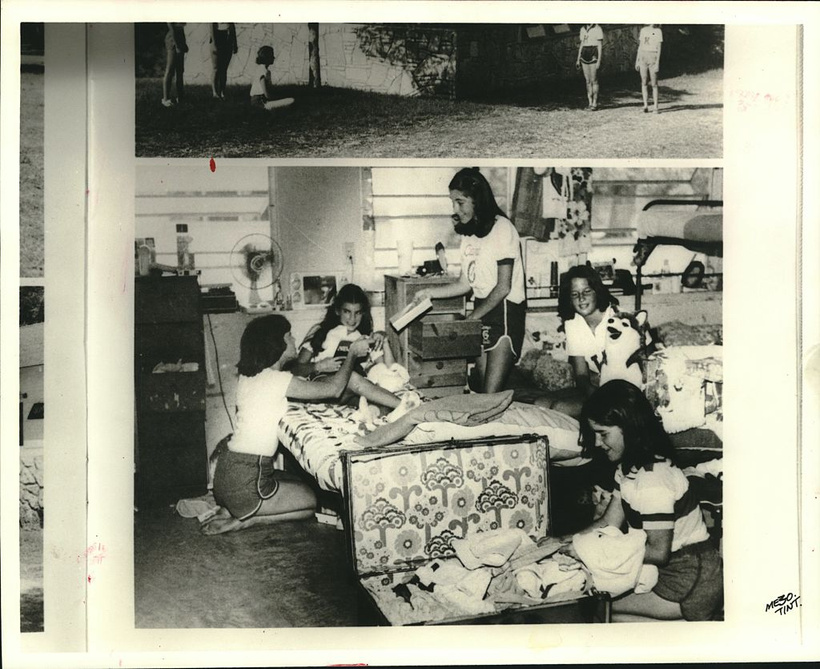
A Camp Mystic Brochure from 1981 (via Getty)
THE NEXUS OF LLMS/A.I. AND CREATIVITY: A.I. Boosters argues that LLMS can free us for more creative endeavors — or "facilitate" our creative work. THOUGHTS???? (This one's with the brilliant Vauhini Vara, whose work grapples with these questions in a way I've never seen before). Hopefully this week's piece on how A.I. keeps wasting my G-D time will spark some questions on your end.
WOMEN'S FITNESS INDUSTRIAL COMPLEX. As our co-host Zoe Rom puts it: "Women are told they need to do fasting, creatine, lifting, fueling, and recovery differently than men. Sometimes the science backs it. More often the "different" is a marketing mechanism: invent a gendered problem, sell a gendered protocol, collect the markup." What's going on here? Where have you seen it, what pisses you off about it... take this wherever you'd like.
INTERGENERATIONAL FRIENDSHIP with Andrew Sean Greer, author of Less (and Villa Coco, a new book with an intergenerational friendship at its center). You can ask questions about how to find intergenerational friends, how to sustain those friendships, what people seem to love so much about them, wherever your heart takes you.
Anything you need advice for/want musings about for the AAA segment. You can ask about anything — it’s literally the name of the segment.
Anne Helen Petersen: This is the Culture Study podcast, and I'm Anne Helen Petersen.
Kerry Howley: And I'm Kerry Howley, a staff writer at New York Magazine. I recently wrote the piece “Could the Girls of Camp Mystic Have Been Saved?”
Anne Helen Petersen: So today we are talking about summer camp, and we're talking specifically about sleepaway camps that are a culture unto themselves, that are credited with identity formation, rites of passage, lifelong communities.
And we're gonna start by talking about Camp Mystic, a private Christian summer camp for girls about an hour southwest of Austin, Texas. Most of you, if you're listening, you know the name Camp Mystic and you know about what happened last year, but we're gonna get into that gradually. So Kerry, how would you describe Camp Mystic before, like, how was it understood? How did people talk about it? Like, how did it live in the popular imagination of people in Texas before last July 4th?
Kerry Howley: Yeah, I mean, I think when I first heard about Camp Mystic, like a lot of people, what I heard was that it was a Christian, largely white or entirely white camp for girls of means, and that it was a legacy camp.
All of these things are true, but it was really interesting to talk to people who went to surrounding camps and ask them about Mystic.
Anne Helen Petersen: Right.
Kerry Howley: Because it, it, it actually isn't like the luxe camp. That's a camp called Camp Waldimar. And it is not the most rustic camp, but it's one of the more rustic camps. There wasn't AC in the cabins, for instance. What I heard again and again was this is a camp that is especially associated with a sense of Christian innocence and wonder and simplicity.
Anne Helen Petersen: And there are a whole bunch of camps that are in the Hill Country of Texas, which is this area outside of Austin.
I lived in Austin for four years getting my PhD, and we would sometimes go there on the weekends. It's one of the places that has the most population influx currently of people moving to Texas. There's a lot of retirees who live there now. But I think it's also this idyllic escape from the city, whether that city is Austin or San Antonio or Houston or Dallas, and that the...
I just didn't understand that there were so many camps there.
Kerry Howley: Yeah, like the post office was mostly dealing with camp mail to home. It's basically that's what the town is doing. It's facilitating camps. And then those camps, as you know, go on to become something people identify with for the rest of their lives.
You know, "I'm a Longhorn person," or, "I'm a Mystic person."
Anne Helen Petersen: Yeah.
Kerry Howley: It was a kind of identity formation that I, as someone who never went to camp, was not familiar with at all.
Anne Helen Petersen: Yeah, we should situate ourselves as camp or non-camp people. So I grew up going to camp starting in second grade.
I loved camp because I lived in northern Idaho, and summers were, like, endless and boring, and all I wanted to do wa, go stay in a cabin. And then I mostly went to church camps that were founded and run by the Northwest Presbyterian Association, the Presbytery, that were very rustic. Like, we're talking, I think that tuition for a week was somewhere around, like, $80.
Kerry Howley: Wow.
Anne Helen Petersen: And if you couldn't pay, like, whatever, the church would pay for it. Like, if you wanted to go to camp, you could go to camp. And I became a counselor there. While I was also going to those camps, I also went to other camps. So I would go to science camp and math camp, and then starting when I was in seventh grade, I would go to French camp, French immersion camp. At first in the San Juan Islands. There's a whole island that's just a French immersion camp.
And then, I would go to a someplace that will be familiar for anyone who's from Minnesota or the Midwest called Concordia Language Villages, where you go for a month and you get high school credit, but same sort of… some of the rituals that I hear described about like Camp Mystic, but also some of the camps out east or some of the more popular Jewish camps in California and out east. Like, when you're there for that long, there are these rituals and these parts of your identity that become associated with the camp.
Kerry Howley: Is there a particular camp that you now find yourself associating with?
Anne Helen Petersen: You know, I still think of myself as someone who went to the Presbyterian camp that I went to and worked to.
It was Camp Spalding. And I have very strong feelings about what has happened to that camp. Like, it's gotten fancy, and that offends me. Which is silly, right? I am no longer Presbyterian or a Christian, so I have complicated feelings about that. But if someone brought up our rival camp, I would talk some shit, right?
Like still today. Those sorts of ingrained things.
Kerry Howley: Yeah, that makes sense.
Anne Helen Petersen: I do meet people all the time who say there seems to be this divide between I was a person who went to camp or I wasn't a person who went to camp, and we see that in the questions as we go on. I went to camp because I was bored, and then, now that I realize it, my mom… I wasn't forced to work during my summers. All of my other friends had work for pay, and that was not something that my mom was like, "I want you to do stuff to get out of this town essentially." And it allowed me to meet people from all over the place. Yeah ... and to really experience a lot, and I loved it.
And whenever parents today are asking, you know, "Should I send my kid to summer camp?" Especially, you know, a cheap YMCA camp. I'm like, "Absolutely. It was my favorite thing in the world." But I think what we're talking about here is another level because the parents become so invested in their kids' identity at camp and their kids' experience at camp.
Kerry Howley: Yes. I did not go to camp. My parents were basically too cheap to send me to camp. And so it just hadn't been something that I thought about. I think about it as a parent. Like, I love to send - my kids have so many useless skills that they've picked up at random camps I've sent them to in my college town. You know, I'll be like, "Yeah, you know, you should learn to like do paper-making with recycled materials this week." And they're like, "Okay." But sleepaway camp is not something I'd considered. And I don't think I really understood what I had missed by not going to camp, until, it sounds crazy, but until spending six months writing this piece and hearing the intensity of women's experience and their memories, and to the extent where it could feel very melancholy in terms of, life really never lived up again to those six weeks you spent at camp.
Anne Helen Petersen: Yeah, yeah, yeah. And I think, when you do it every year -
Kerry Howley: Mm-hmm ...
Anne Helen Petersen: - and you see the same people every year, it comes to feel like this place where you really get to be yourself maybe too.
Kerry Howley: Yes. And someone I spoke to who had attended a neighboring camp made the point that… All of us feel so alienated from land.
Anne Helen Petersen: Yeah.
Kerry Howley: And there's this deep connection to the land, the lake you return to every summer. You feel a connection that you don't feel to any other piece of land -
Anne Helen Petersen: Yeah ...
Kerry Howley: - on Earth.
Anne Helen Petersen: Yeah. Sometimes there will be a smell that I encounter in the summer here. So my camp was in Eastern Washington, where you just get this dryness in the late summer.
It's like a crackling of the evergreens. And it brings me straight back to walking one of the crappy trails around camp, and feeling like there was nothing to save the present, right? I had no worries. I was just there. There were boys there, though, and that's a difference, I think, too, with Camp Mystic.
Kerry Howley: Yeah, I mean, at Camp Mystic, definitely, especially being situated in Texas, I think has this aspect of this is a place where girls' activities mattered and they weren't subsumed to boys' activities. And a lot of people told me that. Like, you could be openly competitive in a way that might be frowned upon in school.
Anne Helen Petersen: Mm. That's so interesting, right? Because in some ways, it's this place where pure girlhood can exist but at the same time, where you can be ambitious in a way that you're socially conditioned not to be in more public spaces.
Kerry Howley: Yeah, and of course, you can shed the person you are at school and then start over when the gates close, and now I'm this person this summer.
Anne Helen Petersen: Ugh. Did they have full-time uniforms or just on Sundays?
Kerry Howley: Just on Sundays they wore white for devotionals, yeah.
Anne Helen Petersen: Vest worth. In some ways, it's a Christian camp almost in quotes. It's not associated with any church, right? Camp Mystic. Right?
Kerry Howley: Yeah.
Anne Helen Petersen: But in some ways, some of the rituals that they did were way more, and some of the language that they use about the camp is more Christian than anything I encountered at my very Presbyterian camp.
Kerry Howley: Yeah, it wasn't a Christianity that I had encountered before.
I keep saying that, but I grew up in New England with this very sanctimonious Catholicism. And a lot of the verbiage, and the action around that way of being was about good works, and devoting yourself to people in poverty, and stuff like that, and there just didn't seem to be any of that in the kind of …
Anne Helen Petersen: It's a vibe. Yeah. It's a Christian vibe.
Kerry Howley: I mean, yeah, like, it wasn't about sacrifice. It was about being kind. Like, there was so much focus on being kind, but it seemed like only to each other, right? Like, within this world we've created.
Anne Helen Petersen: We should back up and say, I mean, we'll say this in the intro, but you spent all this time interviewing and writing, interviewing people who involved with the camp and writing this piece, and I was really struck in the piece about, I think about three-fourths of the way down, you start asking people involved, like, "What is the ministry?"
Kerry Howley: Yeah. Ministry isn't a word we used a lot in New England, so at least in my experience of sanctimonious New England religiosity. So I was like, "The ministry, that's interesting." That to me would have been, like, the part where you are giving out scholarships to children who can't afford the $4,000 to come to camp.
But people just seemed confused when I was talking about that. The ministry according to the Eastland brother I spoke to was the activities that they do.
Anne Helen Petersen: Well, and it's just like being a person who is a Mystic person in the world. To me, it reminds me of some messaging that I did receive as a teenager, which was like, we need to show God's love through being a cool person essentially. Like we should be magnets for the world, that people wanna be like us. Because if they wanna be like us, then they wanna be Christian. Does that make sense? I think that's their understanding of ministry.
Kerry Howley: That does make sense. I think you get it.
Anne Helen Petersen: Yes. Okay, so to backtrack a little, we're gonna talk about Camp Mystic, and about some of the discourses of camp, and of girlhood, and everything that's involved with it. But we wanna also talk about what happened and why we're talking about Camp Mystic specifically. So for people who aren't familiar, can you give us a refresher on what happened?
I still can't believe that it was on July 4th, 2025.
Kerry Howley: Yes. Early in the morning of this past July 4th, there was a historic flood in Hunt, Texas, where Mystic is located. And the camp was profoundly unprepared and delayed in evacuating girls to higher ground. And 27 of the very youngest campers, ages eight, nine, and 10, were swept to their death in the Guadalupe, which is the river that runs past the camp.
Anne Helen Petersen: It's a remarkable piece of reporting, how you set out when the parents found out that their children were unaccounted for, and what happened in the aftermath. Like, it's just absolutely gut-wrenching. It's horrible. The communication was quite poor.
Kerry Howley: It was like no one wanted to admit what was happening.
Right And so they were... I mean, everyone understands this. When someone's communicating to you only what they absolutely need to tell you, and you know there's much more behind that, that was happening to these parents about the safety and wellbeing of their children. And so of course the parents, they're not in Hunt, right?
They're in Houston, they're in Dallas, and maybe it's not even raining where they are. They have no sense of the gravity of the flood.
Anne Helen Petersen: Yeah.
Kerry Howley: And so they were told, "You should come pick up your girls at camp. They've been unaccounted for." And this becomes, these two words become incredibly fraught. What does that mean, unaccounted for?
And so at first, many of the parents thought, "Okay, this is just like an administrative issue." Like they just, they're just very disorganized right now. They weren't ready for this. It took so long for the parents to understand that they might not see their girls again. And where they went after they were told to come pick up their girls was 20 minutes from Camp Mystic because the roads were impassable.
And so that was something that really struck me when I went down to Texas, was like they couldn't even get close to the site of their nightmares, right? Like, of course, all you would want to do is speed off to where you thought your daughter was. And they're being corralled in this elementary school and, you know, fed little bits of information that are just frustratingly vague for literally days.
Anne Helen Petersen: Mm-hmm. Yeah.
Kerry Howley: And so that experience forms a big part of the article.
Anne Helen Petersen: How did you get some of the families to get on board with sharing their experience with you?
Kerry Howley: First, I was not ready to approach the families. I felt it was too soon.
Anne Helen Petersen: Yeah.
Kerry Howley: And I wanted to collect as much information as possible before crossing that bridge.
Anne Helen Petersen: Yeah.
Kerry Howley: And the piece before this I had done was actually about the Pentagon. It was a profile of Pete Hegseth.
Anne Helen Petersen: Right.
Kerry Howley: And I had had to figure out how to get people in the Pentagon to talk to me, which is something I hadn't done before, and not the kind of thing that I associate myself as a journalist with doing. But I managed, with persistence, to do that. A lot of people talked to me about the insane situation at the Pentagon with Pete Hegseth at the helm.
I had much less success getting campers at Mystic to talk to me than I did with people who work every day in the Pentagon. I could not believe the number of emails that I would send out. I was just scouring newspapers for people who mentioned having gone to Camp Mystic.
Anne Helen Petersen: Yeah.
Kerry Howley: People just simply, they would not acknowledge the email. They would not respond. To the point where you're like, "Am I alive?" Like, what, you start to question your existence, you know?
Anne Helen Petersen: Mm-hmm.
Kerry Howley: The silence around what had happened was so striking to me.
Anne Helen Petersen: Yeah.
Kerry Howley: I did find some people, but it took so much, and people had just decided after the tragedy, "We're not gonna talk to outsiders." You know, I live in Iowa. I don't live in Texas.
Anne Helen Petersen: Mm-hmm.
Kerry Howley: The media causes divisiveness is something that people were saying.
Anne Helen Petersen: Yep.
Kerry Howley: There's no benefit to speaking out because most of the people who had gone to Mystic were still supporting the camp, but didn't want to offend the parents of the dead.
Anne Helen Petersen: Yep.
Kerry Howley: So I've utterly failed at that, and but it did allow time to pass, and by the time I was able to get in touch with the parents, I think that they had moved to a place of frustration from a place of pure mourning, and were ready to talk to somebody, or at least some of them were.
Anne Helen Petersen: Yeah.
Kerry Howley: And I was extremely lucky to be connected to Matthew Childress, who was just an incredible storyteller, was just able to explain to me the experience of waiting in that elementary school to hear news of his daughter with such visual sensory detail that mostly I didn't even need to ask again, which never happens. Usually, you're going back to someone, and you're like, "What color was it? What did she say? What did she say?"
Anne Helen Petersen: Yeah.
Kerry Howley: With most of these parents, I didn't have to, and I think part of that was they were traumatized. Like, these images are seared into their memory. It's not like they're struggling to access them. They're horrifyingly present.
Anne Helen Petersen: Yes. Well, and I've had similar experiences reporting on tragedy where there is this period where no one wants to talk to anyone, and then it's like, "Screw these people. Like, someone needs to know what I experienced, what happened."
And there was this real anger 'cause it seemed like at that point, had they officially announced that they were going to open the camp again?
Kerry Howley: Yes. Yeah. They had officially announced that they were open- gonna open the camp again. And certainly, the vibe among most Mystic alum was like, "Let's move on. This was nobody's fault. Let's move on."
Anne Helen Petersen: It reminds me somewhat of how people who are still very, very close to sororities and fraternities…
Kerry Howley: Mm.
Anne Helen Petersen: And I've done a lot of reporting on Bama Rush, and the sororities and fraternities and some of the things that have happened there. And I also was part of a sorority, but not in a super serious way, is how I would put it. So I would say I would talk to anyone about my sorority.
But if you still are invested in the way that you understand that sorority, the way that it lives in your mind, or fraternity or Greek life at your school, I think there's a very particular stake involved in not talking publicly to others about it, and also not having your name associated with that sort of discussion.
'Cause it's like you're talking essentially to an outsider. Like, this is our private business, and you are talking to someone who doesn't understand our business.
Kerry Howley: I mean, and I completely understand that. It's human, right? Like, I don't love it when people come from the outside and write about Iowa City, where I live.
Anne Helen Petersen: Right. Right.
Kerry Howley: But I also think here there was this tension of, I support the camp, but I don't want the parents to hear me talking about that. So even if you're giving me the opportunity to speak anonymously, I'm not going to do that.
Anne Helen Petersen: Yeah. And we should say, too, that Camp Mystic has since announced that they're not opening the camp.
Kerry Howley: Yes. So they were fully planning on opening the camp, and I talked to several legislators who were like, "It's definitely happening," because if the license is denied, Mystic will sue and will have grounds to sue. Because if they've met the requirements from these new safety bills, they have the right to open.
But what happened was there were these legislative hearings after investigations that the state had done, and those went so poorly for Camp Mystic. I mean, the Eastlands seemed very unprepared.
Anne Helen Petersen: And the Eastlands are the people who run the camp, and have historically run the camp.
Kerry Howley: Sorry, yes, the Eastlands run the camp. The surviving Eastlands. And so the Eastlands withdrew their application to open camp this summer.
Anne Helen Petersen: Mm-hmm. What was the reason that families, the parents of these girls who lost their lives, like why didn't they want the camp to open? I know that's a complex question.
Kerry Howley: I mean, what they would tell you is that the Eastlands behaved so irresponsibly that no child will ever be safe in their care.
Anne Helen Petersen: Hmm.
Kerry Howley: I think it's true that the Eastlands have shown themselves to have been, I don't want to use the word negligent, that's a legal word, but to have been very careless with the lives of these children. At the same time, over the months of writing this, I felt like there was some unnamed emotion here, and I think that the camp has failed to show any sense of shame over what happened.
There has always been this sense from them that this is a biblical tragedy that we have all experienced together. Dick Eastland, the camp's patriarch, died as well, and so there's this sense that like, wow, that was awful, like let's move on together.
Anne Helen Petersen: Mm-hmm.
Kerry Howley: Whereas the parents are saying, "Wait, you delayed hours in evacuating our children.
You had children sleeping in a flood way. You didn't have any kind of plan." And on and on and on and on. And so you have these two divergent ways of thinking, but I think, I think just the speed with which they were ready, back to business, there was this absolute lack of, the word that comes to mind is shame, of acknowledging that you are the cause of these deaths.
Anne Helen Petersen: Yes. The messaging really seems like this was an act of God.
Kerry Howley: Mm-hmm.
Anne Helen Petersen: And we can't control God's plan. And so all we can do is continue with our ministry essentially.
Kerry Howley: Right. The ministry. God has called us to continue with the ministry is what they have said.
And I do want to say, many people have said and are quoted in the piece saying that camp involves risk. And I think that's true. It's not that we want to move toward a place of safetyism where children don't encounter any risks, and no camp will ever sustain any kind of injury. But I think in this case, if you look at the facts, like a regular person who is not caught up in the Mystic legacy and mystique would be appalled by the conditions that girls were thrown into on July 4th.
Anne Helen Petersen: The detail that just sticks with me is that these cabins were in the floodplain, and FEMA knew that they were in the floodplain, and that the camp appealed successfully three times to allow them to stay in the floodplain.
Kerry Howley: Yeah. So, some of the cabins were in the floodway which is much worse than the floodplain.
The cabins where the girls died were actually in the floodplain, but I think that's because they were busy evacuating the girls in the floodway.
Anne Helen Petersen: Right.
Kerry Howley: I talked to a hydrologist in the piece who's just-
Anne Helen Petersen: He's so mad.
Kerry Howley: Absolutely. He's so mad. He's so mad.
Anne Helen Petersen: He's just livid. It's such a good quote.
Kerry Howley: Yeah. He was just like, "These people should be in jail."
Anne Helen Petersen: Yeah.
Kerry Howley: But he also said he's not sure this is that unusual.
Anne Helen Petersen: Right.
Kerry Howley: In that everyone knows that kids shouldn't be sleeping in a floodway, but what he said is that this knowledge collapses at the local level.
Anne Helen Petersen: Yep.
Kerry Howley: It's not illegal.
Anne Helen Petersen: Yep. That quote, "This knowledge collapses at the local level,” Also, so stunning. Like, it just makes me think about the excuses that we make in so many different realms of our lives when it becomes something that matters to us, right?
Kerry Howley: Yes.
Anne Helen Petersen: Okay. For people who have not been part of camp, I think that some of these justifications are very difficult to understand.
So some of our questions today are really about what makes camp into this precious experience that becomes so important to protect. So let's start with a question that will take us to a different part of the country. This is from Jamie, and Melody's gonna read it.
Melody Rowell: “We are non-native New Englanders who now live in Boston.
The summer camp culture here baffles me. I've lived in other East Coast states and in the Midwest, and this is the first time I have encountered summer camp as an identity. There is so much that goes into this. No one talks about how much these camps cost, but the quote-unquote 'right ones' are exorbitant.
Parents make sure to emphasize that their kids get real summer experiences, camping, hiking, swimming, et cetera. But these are all things that you can do and access for free and with relative ease in New England. And I do understand how special it can be to have time with kids and without parents, but also it is only certain kids who can access these types of camps.
And for many kids, these camps take over their entire summer. Where did this culture in New England come from? Is it a holdover from boarding school scheduling? Is this what happens when lack of childcare and excessive generational wealth meet? Is it just another social signifier to put on a kid's college transcript, counselor at elite summer camp?
Also, is my kid missing out if I just send them to regular old week-long camps?"
Anne Helen Petersen: So because you're from New England, I wanna know, how did you understand what camp was when you were growing up?
Kerry Howley: I don't think I really thought about camp. It was just something that was inaccessible to me, and I didn't grow up in a wealthy community where everyone was going to these fancy camps.
Anne Helen Petersen: Yeah, yeah.
Kerry Howley: And so I don't know the history of the camps of New England. But what I can say is I think if you're coming at this from a place of understanding and compassion, how could someone send a child back to Camp Mystic, for instance, after what had happened?
I mean, it is almost incomprehensible. But the justification that made the most sense to me was, it came from this one mother who said, "It is so important to me that my child have lifelong friendships. "And this is where those are going to come from."
Anne Helen Petersen: Yeah.
Kerry Howley: And I think a lot of us worry about our children having deep ties over time.
Anne Helen Petersen: Mm-hmm.
Kerry Howley: And she said, "It takes a village. This is their village, and they're gonna learn all this stuff at that camp." Like, the camp also taught them table manners and stuff like that. They're gonna learn all the stuff I can't teach them, right?
Anne Helen Petersen: Yeah. Yep.
Kerry Howley: I mean, presumably you can teach them table manners. But the sense of I need them to have a community, and this is the community, that was the one thing that kind of resonated with me in terms of, why would you do this crazy thing?
Anne Helen Petersen: Yeah.
Kerry Howley: And so I imagine that that's a lot of what's going on is, I'm giving you... A network is a more charged word for it.
Anne Helen Petersen: An adult term.
Kerry Howley: But we could also call it, friendships, community, people who will... Everyone would say about Mystic, "Well, this is where you're gonna meet your college roommate."
Anne Helen Petersen: Yep.
Kerry Howley: You know? You're gonna carry this through.
Anne Helen Petersen: Right, which echoes a lot of conversations about when you participate in Rush, whether it's at 'Bama or at a place like University of Texas, it's this is where you're gonna meet your bridesmaids, and this is where you're gonna meet your husband, right? Like, essentially, this is where you're going to meet your network. The thing I... You know what? When I was going to camp, and even before that, let's say, in the 1960s, 1970s I think that there was this strong sense of kids need to be with nature, right?
Like, this anti-urbanism kind of…
Kerry Howley: Mm-hmm ...
Anne Helen Petersen: right? Like, we need to give kids a chance to commune with nature, get kids out of your parents' hair, specifically. Even though I think a lot of kids in these scenarios weren't necessarily from homes where both parents were working, but still, it's a lot just to have your kid present all the time.
Whatever your class, it is a lot to have a kid present all the time during summer. And I think that the other thing we haven't talked about yet is that these camps are also almost always device-free spaces.
Kerry Howley: Yes.
Anne Helen Petersen: Like, no screens. So they're learning to be with each other in an unmediated way that I think parents really value right now, too. So that's part of it. And you know - have you heard all the discussion about give your kid a '90s summer? Do you know about this? Be like a '90s mom, like basically kick your kids out the door and just let them fend for themselves. It's essentially camp. Right? Like, camp is just a little bit more structured and presumably safe, but it is a privilege to make your kid fend for themselves in this capacity.
Kerry Howley: 100%, and I absolutely feel that as a parent signing my kids up for a million camps. It's like this will be screen-free time.
That's what I'm paying for. Do not show my child any... Like, that's on my time they watch screens, not on your time. Right.
Anne Helen Petersen: And it's also a hack for having to deal with all of the week-long camp scheduling, which can be exhausting to figure all of that out. And some of them end at different times.
Like, I've just watched all my friends have to deal with that sort of jigsaw puzzle, and this is just like…
Kerry Howley: My friends in LA call it producing summer.
Anne Helen Petersen: Yes.
Kerry Howley: You know?
Anne Helen Petersen: You get it. And this is one decision. You're like, "You're going for a month."
Kerry Howley: Yeah.
Anne Helen Petersen: And then also you get the time as parents alone, which is precious.
Like, you can understand why this becomes something that feels important, but I think what this question asker is also getting to is even the echelons of the right camps and that sort of thing. Like, if your kid isn't going to the right camp. And you did a little bit of understanding that in terms of these different camps in the Hill Country.
What did you find there?
Kerry Howley: I found that parents who were sending their kids to Mystic specifically were looking, they were interested in tradition and carrying on tradition. And I think there was this idea of Southern ladyhood. Tweety Eastland, who was the matriarch of the camp everyone said she would teach you how to be a Southern lady.
She would come to your cabin and read devotionals with you, and everyone wanted to be like her, and girls would follow her around the camp. And then there were all these stories about, and then these women would become adults and age - and Tweety's in her 70s now - and maybe somebody would get breast cancer, and Tweety would appear with the right thing to say, and someone's husband would die, and Tweety would appear.
She was deeply in the lives of these women.
Anne Helen Petersen: Mm-hmm.
Kerry Howley: And there's something about… they're creating a community that revolves around them, but they're doing so through real sustained connection.
Anne Helen Petersen: Yeah. And some of it, I think is actual acts that she's doing, but some of it is also almost like this mythical understanding of these camp leaders who love us, right?
Kerry Howley: Yes.
Anne Helen Petersen: Who care about us, who cherish us, and who are not our parents.
Kerry Howley: Yes, and also there, there were all these incentives at Camp Mystic. Like, you might be a cup girl it was called.
Anne Helen Petersen: Yeah, what is that? Or an m-girl. Can you explain this?
Kerry Howley: I can't, no. [Laughter] But, I know they're really big honors. Especially cup girl, I think. To the extent where I've seen videos of people receiving cup girl and they're flipping out, right? They're so thrilled. Cup girls are like hugging, running up to each other and jumping and hugging and -
Anne Helen Petersen: Is it like head girl in boarding school or something? Like similar to that?
Kerry Howley: It's like a deeply meaningful honor that the Eastlands bestow upon you.
Anne Helen Petersen: Mm.
Kerry Howley: And also you're broken up into two teams. Both of which... So there's a lot of like, Native…
Anne Helen Petersen: Native American appropriation…
Kerry Howley: Yeah ... appropriation here. Yes. So there's two tribes, and that creates an intense sense of loyalty to your tribe. All of it goes back to the Eastlands. There is a way in which they were cultivating a kind of loyalty so intense, and I think it is connected to these little honors -
Anne Helen Petersen: Mm-hmm ...
Kerry Howley: - that even after 27 girls perished at this camp, people will still say, "I want my daughter to go to this camp."
Anne Helen Petersen: I don't think you use the word cult, but you quote someone who uses the word cult. And that word has legal implications, but I think we can identify that like some of the behaviors and the way that like, through ritual, through -
Kerry Howley: Mm-hmm.
Anne Helen Petersen: the longevity of the camp, through generations, all of these things, it becomes something that you become dedicated to the idea of the thing more than the thing itself.
Kerry Howley: Yeah. I mean, I think the Eastlands were genius at creating tradition and ritual, and often that was very self-serving. Like, "Oh, it's not traditional to have walkie-talkies in the cabins."
Anne Helen Petersen: Right.
Kerry Howley: Right? It's not, we can't have cell phones even though that would have saved lives. It was also very economically expedient not to change anything. Right?
Anne Helen Petersen: Right. Well, and this gets to my anger about my camp from when I was growing up being fancy now. I'm like, well, part of the thrill was that there were squirrels in the freaking bare bones bunk houses, where we slept on tiny little mattresses on the ground, or that the shower was just disgusting.
Like, that was part of the bonding, was how simple things were. And I'm sure too, when these campers talk about their memories, and having lived in Texas, trying to sleep at night with no air conditioning is a particular sort of memory, right? It is different from your everyday life.
Like it underlines that this is a place where things are different.
Kerry Howley: I do think there was this sense of walking into a fairy tale. Like, is this real? Someone who taught there for many years who was a counselor there told me they would play this game, is it real in here or is it real out there?
Anne Helen Petersen: Yeah.
Kerry Howley: Cults do create relationships.
Anne Helen Petersen: Totally. Like, I think about this all the time ... definitely. My best friends are from my sorority.
Kerry Howley: Yeah.
Anne Helen Petersen: Like, they are, there are mechanisms, and there's always… there's a fine line between a societal organization and a cult.
Kerry Howley: Yeah
Anne Helen Petersen: Yeah. It's not as clear as some people think, right? And I think some of it is when wrongdoing happens, how do people react?
Kerry Howley: Yes, exactly.
Anne Helen Petersen: Okay. Next question is a little bit about money in these camps. This comes from Gabrielle.
Gabrielle: Our family owned and operated summer camps, just another form of nepotism, and a place where kids of rich families get away with stuff.
I've gone to and worked at a lot of camps over the years, and I experienced this at a very wealthy family-owned camp where I believe running the camp is inherited rather than a position earned, and the legacy families seem to get away with so much that non-legacy campers and staff can't or don't.
Anne Helen Petersen: Hm.
This is so… This is totally outside of my experience, because, no one could fuck around. Like, there was no misbehavior.
Kerry Howley: Wow.
Anne Helen Petersen: Yeah.
Kerry Howley: I mean, there's a lot in that question. I don't personally see any problem with having a family business and passing it on to your family.
This was certainly, this was a family business. But this idea of legacy organizations getting away with stuff other camps couldn't. I did talk to someone who ran a rival camp who was very sympathetic to what had happened at Mystic. Yeah. But she said, "They're not accredited and we could never get away with that."
Mystic was just so embedded…
Anne Helen Petersen: They're not accredited?
Kerry Howley: They're not accredited. I'm not sure. I talked to the accreditation agency, and it actually didn't sound like accreditation was... I'm not sure that that would've changed anything is what I'm trying to say. Right, right, right. But most camps aren't accredited.
But she was like, "They can get away with stuff we can't get away with. They're deep inside the fiber of this town and this state." Everybody knows them, and that's part of the thing. Like, no one questioned the idea… I think it is a totally reasonable assumption that this camp that existed for 100 years without any deaths, that your child would be safe there.
Anne Helen Petersen: Yeah. Right. There's a detail in the story, too, where one of the parents, I can't remember who, as he was driving from Houston, I believe, to... Because his daughter was unaccounted for.
Kerry Howley: Mm-hmm.
Anne Helen Petersen: He called Ted Cruz.
Kerry Howley: Yes. That was something that was so interesting to me, the way that these parents were powerful people.
They know how to use -
Anne Helen Petersen: Mm-hmm.
Kerry Howley: - the mechanisms of law and money to get what they want, right? They're not powerless, but they were unbelievably powerless in this situation. And there was little they could do to convince Hunt to conduct its own investigation. Like, there was this kind of small town Texas power structure that just wasn't affected by the big Houston law firms. And that was surprising to me.
Anne Helen Petersen: Right, and this is the ... This falls apart when it gets to the local level, too.
Kerry Howley: Yes, yes. I think the Eastlands were really genius at that level, right? Like, they knew everybody in town. When Dick Eastland underwent therapy for cancer and he lost his hair, like, a bunch of people in town shaved their heads in order to show solidarity.
Like, these people were deeply, deeply loved. And it was just a completely different vibe than all of these parents who are lawyers and doctors and exist in this, like, world of rules and legal structure. Right? It was just very much about, "This is what we've always done. This has always worked. Everybody loves us."
Anne Helen Petersen: Yeah. And that's part of the appeal, right, of the camp, is that like, it's this very local, non-lawyer and doctorly... Like, it's not ostensibly a bourgeois organization.
Kerry Howley: Well, I think it is, because all the other girls are lawyers and doctors’ children, right?
Anne Helen Petersen: No, totally. It is, but it's like cosplaying it's not. Do you know what I mean?
Kerry Howley: Right, right, right. We're not gonna have air conditioning. We're going to swim in this kind of dirty lake.
Anne Helen Petersen: This is the thing about the river, is it is not a good river.
Like, the way that people talk about swimming in this river, maybe it's just you swim in whatever river, whatever body of water is your body of water becomes precious to you. But just comparatively, it is not a nice body of water. I'm just gonna say that.
Kerry Howley: Yeah. I think that that's part of what's interesting, though, like the way people would talk about how beautiful it is.
And it's like that, I call it in the piece, a strenuous act of collective imagination. Like, I believe you. But it wouldn't be, it's not obvious to you and me 'cause we're not under the spell, but the spell is real.
Anne Helen Petersen: This next question gets to some of the parents thinking about the importance of camp, and this one comes from Kristin.
Kristin: "Right now, I'm thinking about how, as an adult, I'm really jealous of people who had that sleepaway camp, roughing it nature experience because it seems like they have this way of life that's just lower stress or somehow more fluid than my own. I feel like the people I know who went to camp live more effortlessly than I do now, and I just ache for that effortlessness.
I'm also already thinking about how I want my son to have that experience, even though he's only five and it's way too early to be worrying about sleepaway camp for him. But what's sort of wild to me is that I very much could have had that experience, but I was a deeply interior child who just hated the real day camp that I went to one summer and absolutely loved my arts and sciences day camp.
If my parents had sent me to the sort of sleepaway camp that I'm now envious of, I know I would've been miserable. I don't know exactly what my question is beyond why do I feel this way, and what should I be thinking about for my son, even though I know it's years in the future?"
Anne Helen Petersen: I love our listeners. This is such a great question.
Kerry Howley: Yeah, I love this question. I don't know what to say, but I find it a very endearing question.
Anne Helen Petersen: I think that what I see in the first part, this like, "It seems like they move more effortlessly through life than I do," and she talks about camp roughing it, nature experience.
Like, at least when I think about a camp like Mystic, these places where you make friends, like what she's talking about is, you learned how to be with other people for long periods of time. You learn how to socialize and how to network, and then that also offers entry, right?
Kerry Howley: Yeah. Wherever you go, you're a Mystic girl, and you'll find… even New York City, I've talked to a bunch of Mystic girls in New York City, right?
Anne Helen Petersen: Yep.
Kerry Howley: You have that connection and that no one else can really ever understand.
But I also wonder, I do think people idealize these camp experiences so much that it's impossible to tease apart what's real and what is you imposing some idea of camp over it.
Anne Helen Petersen: Well, and what's fascinating to me is that there are certainly girls who had horrible times at these camps.
Kerry Howley: Yes.
Anne Helen Petersen: Who were incredibly homesick, who felt excluded, who were the only person of color maybe in the entire camp at the time that they were there, because it's not like they're explicitly an all-white camp, but it is a very, very, very white camp.
What if they weren't Christian or felt like they had different beliefs? There's just a lot of ways that you could have a bad time.
Kerry Howley: Yeah, and there are some stories from early Mystic, like before the Eastlands... well, Dick Eastland inherited the camp from his grandmother, but in the earlier iterations of Camp Mystic, there are stories of girls crying all night because they're homesick. And then the camp administrator will invite the parents to come, and the kid will get in the car, and they'll drag the kid out at the last minute, and the parents will drive away.
And because it was like this sense of tough love. Like, you make it through a week, and then of course later that child is like, "I'm so glad that happened because I just went back for 13 years." Right. You know?
Anne Helen Petersen: I also, I will say that I write letters to all of my friends whose kids who go to camp 'cause I just remember what a joyful experience that was. But I always have to remember that when I was a counselor too, there were people who had a miserable time because it's not an experience that fits with their personality, for whatever reason. There can be so many reasons for that.
Kerry Howley: Totally.
Anne Helen Petersen: But you can't… Like, that dissent doesn't work with the narrative.
Kerry Howley: Yeah. No, I talked to so many girls who were like, "I would count the days to camp, and it was the entire year was just waiting for camp." And then I would talk to other people who were like, "I mean, I liked camp, but I wasn't one of those girls."
Anne Helen Petersen: Yeah, yeah.
Kerry Howley: And I was like, "Oh, that's a type of girl." That's a type of girl who comes to camp. Camp girl.
Anne Helen Petersen: Right. It's like a horse girl, right? Yes. It's like a type of girl. 100%. The other thing that this is making me think of is you quote someone who went to Camp Mystic, who wrote a Substack post, which as far as I can tell, has now been deleted -
Kerry Howley: Oh?
Anne Helen Petersen: - where, I went looking for it today, and there's part one, but then part two is gone. But basically she seems to reference, what does she say? Like, the whiteness encroaches so gradually that you don't even notice it. Something to that effect.
Kerry Howley: Mm-hmm. That was Alexa Fleet, who was so useful to talk to because she's a Mystic alum who's just finished her sociology PhD. So she had a lot of thoughts.
Anne Helen Petersen: Yeah, I'm sure. And I think that that, this is the ease as well, right? Is that you're operating in this space of whiteness where no one's complaining that there's tribes that you're a part of.
Kerry Howley: Mm-hmm. Yes. And she was really great about being like, "It's true that this is a place where I was able to be my authentic self in a way that was very hard when I was surrounded by boys." And also she called it a place where white supremacy is inherited gently.
Anne Helen Petersen: Yeah.
Kerry Howley: I mean, this is networking. These are gonna be the people you turn to in your professional and personal life, and they all look the same.
Anne Helen Petersen: Yeah. So that's the other reason why camp might be a place where some people -
Kerry Howley: Mm.
Anne Helen Petersen: Both the ease of whiteness is desirable, but also when you look at it, you're like, "But I don't… it's also a space that wouldn't accept me," right? Or that I wouldn't feel accepted in and wouldn't... So I think that that duality, and this comes… you can talk about this with class, you could talk about it too with sexuality, which doesn't seem to come up here, but certainly there are people who are lesbians who have gone to this camp, right? And so, how does desire work in these spaces? And in religion as well, that there is this duality of wanting to be a part of it, but also feeling very uncomfortable with the hierarchy it suggests, if that makes sense.
Kerry Howley: Yes. And I think so much was just assumed at Mystic. It was a place that valued tradition. It wasn't a place that was like, "What's next," right? How can we change? How can we become more inclusive, you know?
Anne Helen Petersen: Yes.
Kerry Howley: It was a place where the entire idea was we're going back in time.
Anne Helen Petersen: Right, right. It's like make America camp again.
Kerry Howley: Yeah. Right. But not any real kind of history, right?
Anne Helen Petersen: Right ...
Kerry Howley: Just this invented history that we've created together.
Anne Helen Petersen: Right. Okay, next question I love because it gets to, I think, the performances of girlhood and authentic self that we've been talking a little bit about this entire episode.
This comes from Andrea.
Andrea: “I grew up going to a secular girls overnight camp in the Midwest, not specifically Jewish, but largely attended by Jews, and was always shocked going to the reunion in the fall when I saw how different so many of the girls from the ritzier Chicago suburbs looked, dressed, acted at home versus at camp. Like they were trying out being chill tomboys for the summer only.
How much of these Texas camps are about getting out of the performing feminism grind and being rugged and chill, or how much femininity is still being performed every day at camp because of the status of these camps?"
Anne Helen Petersen: Yeah, what do you think of this?
Kerry Howley: Yeah. I mean, we've talked about this a little bit, but interestingly, I talked to someone who had been at the camp in the '70s, and she had been back recently, and she was disappointed because the camp she remembered was rugged. It was girls in torn jeans and, like, mud on their faces, and she was like, "All the girls are wearing makeup and their hair looks perfect," right? There's like, girls have this pressure... I don't know. I don't wanna make it sound like it's totally imposed from outside, but girls are presenting more clean -
Anne Helen Petersen: Mm-hmm ...
Kerry Howley: - than they did in the '70s. There was less of this tomboyish vibe, and she was sad about that.
Anne Helen Petersen: Yeah.
Kerry Howley: But yes, certainly, I think... And I think it's healthy. I think it's great for a kid to go to camp and be like, "I'm gonna try to be someone else for a few weeks," right?
Anne Helen Petersen: Yep.
Kerry Howley: I do think there's a lot of that play going on, and that's part of the reason people value it so much.
Anne Helen Petersen: The opening image from your piece, and then talking about this place where you could go away and where it's quiet and where it's safe and pure. Like, there's this real sense of innocence.
Kerry Howley: Mm-hmm.
Anne Helen Petersen: And almost, like, purity, right? And this is connected to some of this conversation about the gentle inheritance of white supremacy, but it's like a place where sex doesn't exist almost. Does that make sense?
Kerry Howley: Yeah, I think that's right. I mean, I think there's this idea of, like, pure Texas girlhood, which isn't -
Anne Helen Petersen: Yes.
Kerry Howley: - it isn't weak, right? Like, it's about ... I think some of the people who felt left out at Mystic were, it was because they weren't athletically superior, right? Like, it was a camp where they really valued strength, and rowing, and who was the best at soccer or whatever.
Anne Helen Petersen: Yeah. Or archery.
Kerry Howley: Soccer, tennis. Yes, exactly. Thank you. And maybe you felt left out if, like, your talents were quieter or more artistic. But there was this idea that you're cut off from the corrupting world.
Anne Helen Petersen: Yeah. Right, and I think this is where the loose Christianity comes in, too, right? Is that this is a place that's away from the corrupting forces of secular society. And there's one guy at the camp, and he's a good guy. He's like the dad guy. He's someone that everyone feels comfortable.
Kerry Howley: He's gonna teach you to fish.
Anne Helen Petersen: Yes. Yeah. He's gonna teach you to fish and not feel gross about touching the fish, which is a story that everyone tells.
Kerry Howley: Yes.
Anne Helen Petersen: In some ways, it's like, oh, this is this lovely space where you're away from the performance desires of the male gaze.
Kerry Howley: For real. I mean, that's a big part of it.
Anne Helen Petersen: Yeah. But also, like, I think, like, say, like, on- the understanding of what girlhood must be is also complicated. Like, it's this very, very rooted in purity is how I see it.
Kerry Howley: Well, I mean, I did see an application for being a counselor there, and it specifically… there's something on it that is about not being LGBTQ.
Anne Helen Petersen: What? Really?
Kerry Howley: Yeah. I wish I could remember better, but yeah. Specifically you had to forswear those kinds of desires.
Anne Helen Petersen: Yeah, and in these pictures, I should say, of the campers, the gender presentation is pretty normalized in terms of, like, girls have long hair. It reminds me in some ways of this very different, low-key understanding of at sororities, you're not supposed to leave the house without having two of three done, and by that I mean -
Kerry Howley: Hmm.
Anne Helen Petersen: Your clothes, your face, and your hair. Two of the three must be, quote-unquote, done -
Kerry Howley: Wow ...
Anne Helen Petersen: - paid attention to in order to leave these houses, and this isn't every house, but this is top houses at a lot of the major schools. But then at the same time, this particular tomboyish understanding of what girlhood looks like reminds me too of the top-tier houses at Alabama are not, these are not TikTok girls who are in these fancy houses.
Too much makeup is very garish. They do not look like they have had baby Botox. Like, they're not on TikTok at all.
Kerry Howley: Wow.
Anne Helen Petersen: And so there's this real understanding that class is something… it's much more subtler performance….
Kerry Howley: It's counter-signaling.
Anne Helen Petersen: Right.
Kerry Howley: Yeah.
Anne Helen Petersen: And some of that I think could be something that you cultivate and hone at a camp like this one, where you're simultaneously being a tomboy, but also learning table manners, right?
Kerry Howley: Yeah. You're getting off your horse and then winning best manners. And I do think there's something about being a Texas lady -
Anne Helen Petersen: Yes!
Kerry Howley: - that is about excelling in all of those domains.
Anne Helen Petersen: Totally. Yeah, which is different than Alabama, I think. So a Texas lady is this combination of Laura Bush and, like, Ann Richards, right?
Kerry Howley: Mm-hmm.
Anne Helen Petersen: Yeah. But not short hair like Ann Richards. But you could be a leader in that way. It's so interesting, oh my God.
Okay, last question. We're gonna end on some safety stuff because I think this is really important for us to think about in closing. This comes from Tessa, and it's about how what happened at Camp Mystic changes so many parents' perspectives on camp, and Melody's gonna read it.
Melody Rowell: “I have sent my now 11-year-old son to various summer camps ranging from one to two weeks since he was about six. I prioritize spending his time and my money on camp specifically because it encourages independence and gives kids opportunities to take risks in ways that modern American parenting norms typically discourage. My question is, how do we evaluate risk, safety, and camp attendance in this light? The extremes are easy.
Don't let the kids decide whether or not to evacuate in a flood scenario. Do let the kid decide whether or not to eat a snack before a long hike. But what about in the messy middle? How do we evaluate safety in this context?”
Anne Helen Petersen: Oh. I just keep thinking about all these other camps that are also along the river
Kerry Howley: Yeah. I mean, I've obviously thought about this. I've struggled with this a lot, writing this piece as a parent. First of all, I just want to say, I don't think the parents of the 27 girls who died did anything wrong. And I say this because I've seen comments on Facebook that are like, "You signed her up when she was born. You had eight years to review the evacuation plan."
Anne Helen Petersen: Ugh.
Kerry Howley: We, all of us, we trust other people all the time. Like, the random camps I've sent my kids to, I'm not looking at the evacuation. They're at some camp, by a cemetery in someone's messy backyard, making puppets, you know? Like, I don't know what the evacuation plan is. And I live in Iowa. There could be a tornado. Has anyone planned for that? No. Like, I think that a lot of it is just trust. We hope that there's, under that, there's basic legal underpinnings. But I don't think we can live in a world where we put on parents the responsibility of reading, you know, 100 PDFs before you send your kid to camp to make sure it's not in a floodplain.
The parents of - particularly Matthew Childress, and other parents as well - of the girls whose lives were lost at Camp Mystic have been passing all of these very reasonable camp safety bills all across the country. So things like -
Anne Helen Petersen: Yeah ...
Kerry Howley: - there have to be evacuation plans, and people need to be licensed and have special training, et cetera.
And I think that's all very healthy, but at the end of the day, I just think we live in a society where, like, you find a babysitter on Care.com. Right? You're taking a risk.
Anne Helen Petersen: Yeah.
Kerry Howley: And it's something that we live with.
Anne Helen Petersen: I think one of the things, or one of the reasons why we're seeing the reaction that we're seeing is that, Camp Mystic and other well-established camps like this, they are institutions, right?
And we are at this moment of really distrusting institutions. And something like this just gives you more reason to distrust an institution. And what we see from the people who want it to continue to work is like, no, there's actually no reason to distrust this institution. This was an act of God.
And you point this out in the piece so deftly, that there is a place in this messy middle where you're like, we don't have to have everyone, you know, read 27 PDFs before signing up their kids, but also, there should've been such smarter thinking about what to do when this rain started, right? And the alerts that actually went out.
Kerry Howley: Yes. I guess I think that the situation at Mystic was so egregious that it is in that way particular to Mystic.
Anne Helen Petersen: Right. Right, right.
Kerry Howley: But you could easily point to examples of other camps that people say just got lucky. Right? Like, they just weren't hit as hard, and they were also not prepared.
It's obviously difficult to navigate, but I also think there was such a… the particularity of Mystic was related to it being a camp that had existed for 100 years, was reliant on tradition, had no interest in rethinking anything that it was doing.
Anne Helen Petersen: Mm-hmm.
Kerry Howley: And clearly wasn't worried about the legal responsibility, of being responsible for, like, 500 girls.
Anne Helen Petersen: Right.
Kerry Howley: It seems to exist in this other world where we just all trust each other, and things will be fine 'cause they were fine previously. And so one of the things they would argue is like, "Well, we, there were other floods, and it was fine." Right. Whereas from the parents' perspective, it's like, "There were other floods, so why didn't you put walkie-talkies in the cabin?"
Anne Helen Petersen: Right. Or there were other floods, and at another camp when they were trying to evacuate, that's when the kids died, during evacuation.
Kerry Howley: Yes, yes.
Anne Helen Petersen: So that's not a solution either.
Kerry Howley: So what are you supposed to do? Yeah. But the fact remains that there were hours in which someone easily could have taken those little girls and walked them, literally a two-minute walk or less, I think significantly less than two minutes, up a hill, or to a rec center. Like, it was such a dereliction over such a long time span, that it's almost hard to fathom. And everyone talks about that when they go to the camp. I can't believe how close they were to safety.
Anne Helen Petersen: Yeah.
Kerry Howley: They were so close, you know? And so in that way, to me… it almost, maybe it should, but it almost doesn't generalize because it's so astounding.
Anne Helen Petersen: What does this make you think, too, about our larger response to intensified weather events? Because I see similar conversations that happen around hurricanes and flooding that we recently had here in the Pacific Northwest and wildfires and evacuations there.
Like, when all of the precautions happen or the forced evacuations happen, and then there's this, "Well, it wasn't as bad as you guys said." Right? Instead of, like, "Thank God that it wasn't as bad as you said,"
Kerry Howley: And it might... It'll be worse next time.
Anne Helen Petersen: And maybe it'll be worse next time, but it does strike me again as this, like, simultaneous, like, trust and distrust in what people tell us to do, like in guidance, right?
Kerry Howley: Yeah ...
Anne Helen Petersen: Tradition here spoke louder than guidance, louder than safety.
Kerry Howley: Yeah, I don't think anyone was thinking about climate change.
Anne Helen Petersen: No. No.
Kerry Howley: [Laughter] I don't think that was on the agenda. But you know, I was in LA for the fires. Yeah. I had to leave 'cause of the air quality, and it's been interesting to me how much change really depends on the insurance industry, right?
Anne Helen Petersen: Right!
Kerry Howley: It's like people make changes when those changes become economically necessary.
Anne Helen Petersen: Yeah. Well, and I think about this with camp, to be insured, there are certain things that you have to have in place to have insurance as a camp. And the insurance costs rise, but the thing about a camp like Camp Mystic is that they can absorb those rising insurance costs, whereas other camps…
Kerry Howley: Or just not insure certain buildings, yeah.
Anne Helen Petersen: Really, they just didn't insure buildings themselves instead of the entire operation.
Kerry Howley: I've heard people speculate that. I don't have a definitive answer, but yeah.
Anne Helen Petersen: Oof.
Kerry Howley: Because all that's what the FEMA maps are for. They're for insurance purposes so people know how much you should pay.
Anne Helen Petersen: I love that that's what the FEMA map is for, is for thinking about how much you should pay, not actual safety.
Kerry Howley: But yeah, but in terms of what people are doing going forward… The crazy thing is that for the first time, my own child is going to sleepaway camp this summer.
Anne Helen Petersen: Wow.
Kerry Howley: My older child, and he's 12. And I did look at the FEMA map, and I had a friend's parent confirm it's not in the floodway, and that's all I did.
I know that there's risk in this decision. I know it very well.
Anne Helen Petersen: Right. But it's one of those things, too, where there's more risk in them being on the school bus every day, twice a day, all the time. Right? Like, statistically. And evaluating those risks is very hard. And I think just parenthood right now just feels so overburdened with risk calculation.
It's so fatiguing.
Kerry Howley: Mm-hmm. Yeah. And so much of it is just a different kind of risk or risk of being on a screen all day.
Anne Helen Petersen: Yeah. And so I can empathize with these parents who are just like, "I do still trust this organization. This is still a place that I wanna send my kids. Allow me to make that decision."
Kerry Howley: Yeah.
Anne Helen Petersen: So you spent six months reporting this story. What is the thing that's gonna stick with you?
Kerry Howley: Oh man, there's a little girl in the story whose sister was also at the camp. Her name is Gwen.
Anne Helen Petersen: Yeah. God.
Kerry Howley: And her cabin is evacuated, and she walks by her sister's cabin and asks her counselor, "Can we get Ellen?" And the counselor says no. And she then goes into the rec center, where all the girls are stuffed onto these balconies, and it's terrifying.
The rec center is swaying back and forth in the flood, and she's like, "Where's my sister? Where's my sister?" Her sister was swept away, and Gwen was going to have to live with that. The family has to live with that. And that's the story that kind of keeps me up at night because how close, how close Ellen was.
Anne Helen Petersen: Yes.
Kerry Howley: And for Gwen to have just had that chance and then have it denied.
Anne Helen Petersen: Yes.
Kerry Howley: That, and also, there's a story in the piece about Matthew Childress, who he, ever since his daughter had been a newborn, he'd given her 17 kisses, to put her down for a nap.
Anne Helen Petersen: Oh, yes. Oh my gosh.
Kerry Howley: And then as she grew older, she didn't want 17 kisses, so he would just say, "17," and she would say, "17." This was, like, a deeply, deeply connected father and daughter. She was a counselor at the camp. I think she was 18. And after she drowned, which Matthew found out after an agonizing couple of days, he went to the morgue and saw her and turned around, but then went back into the morgue and gave her 17 kisses and left. And just moments like that, I think, little moments in interviews that so intensely encapsulated all of the horror. I mean, after writing all of this, you know, I talked to, I don't know, five families. And I was like, 'Wait, there's, there's 21 more families?'
Anne Helen Petersen: Yeah.
Kerry Howley: You know, like the scale of the suffering was hard to fathom.
Anne Helen Petersen: Yeah. Well, I wanna compliment you again on the piece, which is such... So many people have told me that it has stuck with them in a way that a lot of journalism does not. And it certainly sticks with me, and I'm really grateful that we had this opportunity to talk about Mystic and the girls who were there, and then also this larger apparatus of camp and how the families are moving forward.
So I just, I'm really grateful for your reporting, and I'm grateful for that you were here today.
Kerry Howley: I've really enjoyed talking to you. Thank you so much for having me on. And I just also wanna thank the parents who relived that experience…
Anne Helen Petersen: Yeah.
Kerry Howley: - in order to talk to me. Like, that was not an easy thing to do, and then we had to go back to them for fact-checking and -
Anne Helen Petersen: Ugh.
Kerry Howley: Everything in here that feels intensely is because they were willing to share it with me. So thank you to everyone who read it.
Anne Helen Petersen: If people wanna find more of your work on the internet, where can they find you?
Kerry Howley: They can go to New York Magazine, or they can go to kerryhowley.com.
Anne Helen Petersen: Thank you again for coming on. It was fantastic.
Kerry Howley: This has been great. Thank you so much.