
This episode is just satisfying. I've heard from so many of you about how to deal with accumulated stuff. Not just accumulated linens, or too many hair products, but stuff with emotions attached: stuff that's been directed your way (with great import) from relatives, stuff you're trying to sift through when a parent died unexpectedly, or just artifacts from the last few decades of your life that you feel like you should keep (but definitely don't want to, or have space to). Professional organizer (and Culture Study reader) Tara Bremer joins the pod to grapple with so many of your complicated questions, like:
We have such a meaningful discussion about the various forces we encounter when figuring out what to keep and pass on — and, of course, I can't wait to hear your own suggestions (and help with your own conundrums) in the comments.
WHITE LADY HAIR! Cultural critic Sarah Mesle will be joining us to talk about her new book Tangled: Seven Iconic Moments in White Women's Hair and What They Tell Us About Power, Pleasure, and Complicity. If there's a white lady whose hair interests you, I guarantee you it interests Sarah, too. We can talk about specific celebrity/actress haircuts but also specific styles/trends. I cannot wait for this one.
INTERGENERATIONAL FRIENDSHIP with Andrew Sean Greer, author of Less (and Villa Coco, a new book with an intergenerational friendship at its center). You can ask questions about how to find intergenerational friends, how to sustain those friendships, what people seem to love so much about them, wherever your heart takes you.
Anything you need advice for/want musings about for the AAA segment. You can ask about anything, it’s literally the name of the segment.
Transcripts will appear here within 24 hours of publishing the podcast. We pay an actual human for help with these, so thank you for either being a paid subscriber or listening to the ads that make this model possible!
What Do We Do With All This Stuff?
Anne Helen Petersen: Hey everyone. So a couple pieces of news for you today. First, we released a bonus episode about The Pitt a few days ago with the great Margaret H. Willison. It's just for subscribers, so if that sounds like your kind of thing, become a paid subscriber at patreon.com/culturestudy and get immediate access. We talk all about season two, what did and did not work, who was the hottest. Very important questions.
We also announced that Margaret is going to be joining the Culture Study universe permanently. She'll be doing monthly bonus episodes with me, along with a monthly newsletter feature called the Zeitgeist Syllabus, in which she'll give you a bunch of reading assignments for understanding whatever thing people are obsessing about at that moment. So we're talking, like, historical context, stuff that was written in 1950 about this same idea, and stuff that was written 10 years ago, and stuff that's really making the rounds right now that's more elucidating. You can read my introductory interview with her at the link in the show notes.
And I also wanted to let you know about a few upcoming episodes so that you can get your questions in. You've all been on a tear recently. Our questions have been so good, A+, everyone gives you compliments. So let me use that as incentive for you to submit a few more. We're doing one on creativity and AI, so this is specifically about how AI can or cannot work with our kind of creative juices. We're doing this episode with Vahini Vara, who I love. She's so smart on this stuff. So please take that in whatever direction you want. It's gonna be amazing.
We're also doing an episode with Sarah Mesle about white lady hair. You've already submitted some really good questions for this one, but I know there are more. And then another episode with Andrew Sean Greer, who's the author of Less, if you read that. He has a new book out called Villa Coco, and it's all about intergenerational friendships, so we want your questions about intergenerational friendships. What makes them hard? What makes them gratifying? How do you find them? Take it again wherever you want.
And we also, of course, need to replenish our tank of Ask Anne Anything questions. You can submit all of these at tinyurl.com/culturestudypod. Okay, thanks, and as always, enjoy the show.
This is the Culture Study Podcast, and I'm Anne Helen Petersen.
Tara Bremer: Hi, I'm Tara Breme, and I'm a home organizer.
Anne Helen Petersen: Okay, so Tara, your background is in psychology and counseling. How did you get from there to professional organizer? I think a lot of people have this sort of question. Like, how does someone become a professional organizer?
Tara Bremer: Well, in my experience, I just did it. I just started doing it. It turns out you can just do things. I was practicing counseling before I had kids, and then I had children and wanted to stay home with them, so I stayed home with them full-time for probably eight years. And then… so I have three kids, and once the third one came home, I was like, "Oh, dear. I would like to do something where I get some satisfaction and maybe some affirmation and maybe some money."
Anne Helen Petersen: Mm.
Tara Bremer: Because turns out - having children is kinda thankless. They're not being like, "Thank you for doing what you do, Mommy."
I just found a lot of gratification and I call it healthy control. Like, if I was gonna have control or mastery over this junk drawer, that made me feel pretty good, whereas, being a stay-at-home mom, you don't always know when there's gonna be a blowout diaper or a no-nap day, and it is hard. Thankless. So I was like, "I need to do something where I get some thanks." So I had been sort of, like, blogging about organizing 'cause I did it in my own house, and then I was like, "You know what? Someone's gonna pay me to do this, I bet." And so I started the business and just did it.
Anne Helen Petersen: Well, and also, like… knowing what you know about psychology and counseling, those are things that are actually very important when it comes to thinking about stuff and our relationship to stuff. And we did an interview on the podcast several months ago with the daughter of two hoarders, and talking to her about all of the things that she has learned about herself and about her parents and the psychology of hoarding, and I found it really, really interesting, 'cause it prompted a lot of conversations and self-interrogation about - all of us have relationships to stuff.
Tara Bremer: Absolutely.
Anne Helen Petersen: And every society is different about telling us what is a proper and improper relationship, and where does that line fall? It changes all the time.
Tara Bremer: Yeah. I do think it's a weird thing that I have a job where when I speak to non-Americans, it's gotta blow their minds. I have a job-
Anne Helen Petersen: Yeah.
Tara Bremer: Where I get paid to help people deal with their excessiveness. The psychology does play into it, the personality types. I love the Enneagram. I love all personality typing, but that's my kinda go-to. Like, I'm gonna suggest different things to different people based on how I know they approach the world.
I mean, not everybody knows their Enneagram type, but I try to get to know my clients really well and make some educated guesses. But certainly, mental illness at the kind of extreme, or just depression, anxiety, ADHD, autism, all those things figure into our relationship to our house and our things.
And so I wanna set people up for success, so I try not to do something for them or with them that's not sustainable.
Anne Helen Petersen: We have a lot of questions today. We're gonna treat this as sort of an advice time segment, extended advice time segment. Obviously, this advice is not going to work for everyone. It might work for you. Some of it is about handling your own feelings. A lot of it is about handling other people's feelings, and specifically about handling the feelings of your parents or relatives, because the thing that prompted us to do this episode was just hearing from a lot of people about stuff that they are receiving from their parents, the millennial stuff dump, right?
Is that what we wanna call it, Melody? I feel like we need a good phrase for it. I love it. No, I would say - It sounds kind of fecal, but - I would say - but better than stuff dump, like millennial stuff dump, is actually the boomer stuff dump. So millennials are inheriting a stuff dump from their parents and that generation.
I think actually our parents also dealt with this from their parents, who were the first to really, like, go through adulthood in the post-war, very consumerist period. And a lot of them, too, at least in my situation, like my grandparents were very scarred by the Depression and have some accumulative tendencies because of that.
So it's not so much that they were obsessed with buying things. It was that they were obsessed with keeping things.
Tara Bremer: That's right. And actually, as a sociology person, I would love your thoughts on this. The boomers are in a very unique position. Nobody's had as much stuff as them before.
Anne Helen Petersen: I know. And no one's had as big houses that they can keep all their stuff, many of them. Not all, but many of them have very large houses where they have been able to accumulate these things -
Tara Bremer: Yeah, and they don't move, they stay in the same house for 30 years, so there's no like automatic purging. So yeah, the generational thing is huge. They've got the silent generation sensibilities of saving and keeping. But they don't have the millennial sense of like, "Oh, no, but I can afford to buy my own china. I don't need yours." Or no china at all.
Anne Helen Petersen: Right. Oh, and we'll get into that too, and I think also one thing we'll talk about is like millennials don't necessarily have the space to absorb all of these materials, like Gen X too, right? Like, we are in a place where there is now many generations of accumulated stuff and less space than ever because the way that our economy is, because of the way that the generations have worked, less space than ever to keep it, and also less desire to keep it. So we have both of those things coming together.
All right. We're gonna try not to spend an entire hour on every question, even though we could. So -
Tara Bremer: Can I give my own caveat before we get into the questions?
Anne Helen Petersen: Yes, please.
Tara Bremer: Because I do think that all of these questions are super thoughtful and pretty serious, and I want to approach that with respect. But, you know, all of them are kind of in light of our parents' imminent deaths. So I think we should just get that out there to begin with. I am gonna reference that. You know, I don't wanna be flippant about death, but we can talk matter-of-factly about that?
So if I had more information on each one, obviously some of my answers would be different, so I'm just doing the best I can. But, they're good questions.
Anne Helen Petersen: Great caveat. Our first question is not really a question. It's just a list that's representative of the stuff that we're talking about. Let's hear from Amy.
Amy: I wanted to give you a short list of what I've got to sort through. My parents' dining room table is currently in the garage after they downsized to a condo. My little sister's vacuum-sealed collection of Cabbage Patch dolls and outfits that my grandmother handmade for them. My own daughter's boxes of ceramics from elementary school.
I am 55, and our house is the extended family storage unit.
Anne Helen Petersen: She might be the only person who has enough space for her sister's Cabbage Patch dolls. This is happening in my family, 'cause my brother is too far away to have his Christmas ornaments, you know? And so, that box is gonna be at my house. That sort of thing.
Tara Bremer: But it takes a certain kindness or generosity to say yes. But Amy sounds generous, but the flip side to her generosity is that maybe she says yes too often.
Anne Helen Petersen: Mm. And resents it.
Tara Bremer: Yeah, and maybe her family knows that she won't say no to them. So it's a boundary issue. Not to oversimplify, but it's not unkind to say to the family members, "Hey, I'm clearing out some space at home, so if you'd like the dining room table back, you can come pick it up before Saturday, 'cause I've got the thrift store truck coming for my donations." I mean ... it's totally fine for her not to wanna be the storage unit.
And I would be super curious about her daughter. So if her daughter, if she's 55, maybe her daughter's 30, and her daughter may not even want that box of ceramics. Maybe she should ask her.
Anne Helen Petersen: Well, and that's the thing, is it's always asking. This happened actually when my mom downsized significantly a couple years ago, and there were so many things that because I, I didn't want her to throw them away, and she had space to keep them - oh, no - so they just stayed there. But when she actually, when the rubber hit the road, that allowed me a chance to really make some decisions. And I'll talk about that a little bit more as we move forward. So we're gonna go through questions about what to do with stuff.
These are pretty straightforward. We have two questions about photos, which we actually got a ton of questions about photos, and I wanted to include two that are approaching it from slightly different directions. The first question comes from Shelby.
Shelby: I have all of my family photos, three big boxes. I know that I could have them scanned and keep them digitally, but the emotional hurdle of throwing away those physical prints, it's too big to clear. I'm an adult orphan now, and getting rid of those physical photographs feels like I'm losing my parents all over again. I'm also childless, so I don't have anyone to pass these down to. Should I just keep them for now and leave my husband to deal with them after I'm gone?
Anne Helen Petersen: And the second is from Jackie.
Jackie: My mother has a vast amount of family history information, including many photo albums. I don't share her passion, and nor do I want to have responsibility for these when she goes, but no one else in my family wants them either.
She has three brothers and two sisters. None of them want them, so it's going to become my problem, and I don't know what to do with them
Anne Helen Petersen: Okay, so let's tackle this first question first about your own photos. I was just advertised - I was just targeted on Instagram. Kodak is doing this box situation where you put all of your photos, like you put them into these little Ziplocs, you put in any negatives that you might have.
A lot of people I know have negatives, they have slides. Like whatever the format is, you put it into this box, you send it away, and I'm guessing many hundreds of dollars later, you now have it digitalized. You have like a little stick. This is incredible, and I think takes away some of that emotional hurdle if people have the resources to get it done.
But she's talking specifically about the physical prints, and I totally get this. People who didn't grow up with physical prints might not understand the tactile connection to these photos as much. But what would you advise here?
Tara Bremer: Well, I think, too, some people have stretched and exercised the discard muscles more than others, and some people are fine with getting rid of physical photos. I think, again, this is one of those complicated questions that I don't wanna be dismissive of. But I think if it's too emotionally difficult to deal with the photos now, I don't think three big boxes is a big deal. Throw them up in the attic. I wouldn't even bother scanning them.
Why would she? She doesn't have anybody to pass them down to. It just doesn't seem like it'd be worth the money and time.
Anne Helen Petersen: Oh, see, I'm so connected to them. Like the fact, she's like, "I feel like..." I know, but she says, "I'm an adult orphan now, and getting rid of these photos feels like I'm losing my parents all over again." Like she's gonna want these images.
Tara Bremer: But I'm not saying get rid of the boxes. I'm saying put them up. Like, don't worry about it is what I mean. I don't mean -
Anne Helen Petersen: Yeah ...
Tara Bremer: Like if it was me, I'm not as attached to stuff like that, so I might discard them. But like when she said, "Should I keep them now and my husband can throw them away after I die?" Maybe
Anne Helen Petersen: Maybe.
Tara Bremer: I think that's an okay choice. That's okay.
Anne Helen Petersen: That's totally okay.
Tara Bremer: I mean, if her whole household was overwhelming and it was just all this stuff, maybe my answer would be different, but I just don't think three big boxes of photos is a big deal. Don't worry about it. Keep them.
Anne Helen Petersen: Yeah. Well, and I think also, decide, are you a photo person? Like do you want some of these photos? You don't have to get them all scanned. One thing you could do… when I was a kid, this is part of why I'm a photo person, one of my great pleasures was sitting and leafing through all of our photo albums.
We have dozens of photo albums. And my mom would put little notes next to them and stuff, and I just love, like, so much of the story I tell myself about my childhood is really gleaned from the way that these photos were. And so it would be pleasurable to me to go through those photos.
And I've done this actually. I have done this, and I did it very wonky digitally. Like, I took pictures with my phone ... which is not great. But to go through, select 50 that feel really special to you, keep those, put them somewhere precious, right? Where, like, no air, no moisture can get to them, and digitize those. And those are the ones… you will not lose your parents or your memories of your parents if you keep those pictures.
Tara Bremer: Yeah. What you're talking about is a curation, and I think that's a huge deal. And yeah, get them scanned, but maybe just also go ahead and put them in a photo album and put them on your coffee table or somewhere where…
I personally, I went to see a friend, a friend's parents, from my childhood, and it was to get a trumpet lesson for my daughter. So we were just killing time while she was getting her lesson. And I asked my friend's mom, I was like, "Do you have any photo albums of when me and your girls were teenagers?"
And she pulled these things out, and it was a freaking joy, and my son was with me, and we looked through them. So yeah, there's something to be said for that, and just friends looking at things. I think that's fine. And what I would say, how to make time to do that if she wants to get down to the practical nitty-gritty, pull one of those boxes out, put on a junk TV show that you don't have to pay that much attention to.
Anne Helen Petersen: Yeah.
Tara Bremer: Get a glass of wine or a coffee or... make it like an event. Maybe your spouse is with you, body doubling, doesn't have to be going through it with you - and just sit down and do it. And then you've got a nice experience, and you've got the reward of having, getting it done.
Anne Helen Petersen: Or one box per weekend, per weekend, per month.
Tara Bremer: Right.
Anne Helen Petersen: That's how I divvy up tasks. I'm like, "Okay, this weekend, I'm gonna do that one box, and then I'm gonna do another box," so that it doesn't seem like there's a mountain.
Tara Bremer: Put it on the calendar. Make it an appointment with yourself.
Anne Helen Petersen: Yeah. Okay, second question is about photos of people, and we have a little bit of this, photos of people that you do not know. Right? Like extended family. And we got a lot of this, and oftentimes, they're really beautiful photos because they were from a time…
Tara Bremer: That’s right.
Anne Helen Petersen: … when people took so many fewer photos. So she doesn't want them. She doesn't share this passion, she does not want this responsibility. No one else in the family wants the responsibility. I have an idea, but I would love to hear your idea.
Tara Bremer: Okay, yeah, I can't wait to hear yours. So when she says, "It's gonna become my problem," I assume that means after her mom has died, and I say at that time it's okay to get rid of them.
My personal preference is not to throw them away. It would be to… there are some people who want vintage photos, even if they don't know the subjects. So I would offer them for free in a buy nothing group. It really is okay. I often think about what people might use the photos for.
Decor, or there's a vintage lady who sells muumuus here in Birmingham. She helped dress people on the set of White Lotus, and - sorry, caftans, excuse me.
Anne Helen Petersen: Muumuus is such a Southern way of saying it. Anyway, go ahead.
Tara Bremer: So all of her price tags are on little vintage photos of whatever, little black and white.
Anne Helen Petersen: Oh, that's so cool.
Tara Bremer: It's so cool, and so she has a stamp on the back that's got her name and stuff on it, and I kept one. It was a picture of a little white church.
Anne Helen Petersen: Yeah.
Tara Bremer: Just adorable. So people might use that. Someone might use it to dress a set if they're filming a film whatever.
So I would say I think a lot of times people are like, "No one's gonna want that," and I'm like, "No, we gotta always default to try to give it to its next owner” in my opinion.
Anne Helen Petersen: That is such a great idea. The other one that I would advise, and I would actually task your mom with this, because I think if you are really into family history, you are also into the preservation of family history.
Have your mom look into the historical societies of the places where your extended family grew up. Because they want those photos. They absolutely want those photos, and so if you can arrange for a donation after you pass, like what a gift. And if anyone's listening to this and thinking about this, what a gift to your future family to have a repository for them if your family doesn't want them, so.
I love this idea. Okay. Next question comes from Amelia.
Amelia: My husband and I were so fortunate to move into and buy my grandparents' old house, and we love it. There are still quite a few of their belongings here that we've either adopted as our own or stored in the attic. My parents have helped with clearing out some of the furniture and kitchen items, but the thing I'm stuck on is the library.
My grandparents were big readers, and we have boxes and boxes of their books taking up space. I just can't stomach the idea of bringing the books to the dump, but I don't know what to do with them. There are so many that I can't feasibly donate them to a thrift store or library. Also, most of them are nonfiction on topics like Catholicism and history.
After three years of living here, I still haven't found a solution and would love any suggestions.
Anne Helen Petersen: So I know exactly what these books look like. Like I can picture them so vividly. My granddad had this huge armoire almost full of this type of old book, most of them nonfiction. I'm just picturing, the Catholic history is such a niche thing.
It's just lovely. You actually probably cannot donate them to the library. The library does not want them. They do not want old books like that, that they cannot circulate. Like that is not a repository for them. Thrift stores maybe, but probably not. So, I do have an idea for this, but I would love to hear yours first again.
Tara Bremer: I really do wish that we knew how many books we were talking about. This is a really interesting challenge.
Anne Helen Petersen: Well, boxes and boxes.
Tara Bremer: Yeah, hundreds.
Anne Helen Petersen: I'm thinking like 500+ at least.
Tara Bremer: I mean, I had the thought of maybe contacting a local Catholic church and seeing, could somebody use these.
Some churches have very specific libraries on their own, on their grounds. I would also think about contacting a university if there's something that might be useful to a university. I've got a bunch of old geology books, that belong to my husband, and I feel like someday they might be useful in some sort of archival, university situation.
But I would open up a box, take some pictures of the titles and condition. But I just feel like you never know who could use them, and if you feel like donating or dealing with them in a slow manner, you could also, just for funsies, offer them as a lot. Offer some books, as a box. Like, "This box is $20," like see on Facebook Marketplace, someone might be decorating a house, and they just need some pretty colored spines or whatever. I just feel like I never wanna be the one... I don't want the book to stop with me, if I can help it, in terms of going to the landfill. I just hate waste. So if you don't have the time, call the thrift store and just see. Just ask them.
Anne Helen Petersen: Same idea. So many people want old books.
Tara Bremer: Mm-hmm.
Anne Helen Petersen: So for the hardbacks, that is, I think if you put that on Facebook Marketplace, someone is going to jump at it.
Tara Bremer: I want her to do it.
Anne Helen Petersen: $10 a pop.
Tara Bremer: Amelia, do it and report back.
Anne Helen Petersen: The paperbacks, many paperbacks can actually be recycled, like they can just be recycled as paper, so that's a different opportunity than the landfill.
There is less of a market for very old paperbacks. So I would divide them by hardback and paperback, and then I would hopefully sell them as decoration, which historically many of these types of books were used as decorate - like they were only decorative in the first place really. Like they were things that were passed down through families, and they just stayed there, and they were musty, and no one used them. So it's not like you are alienating them from their purpose necessarily.
Tara Bremer: Yeah, and I think it's a good lesson for us to learn. I'm Gen X, so you've got Gen X and Millennial listeners probably for the most part. And it's a good lesson for us: what is it that we want to pass down? What is the point of a book?
Is the point to... Like for me, fiction, I'm never gonna buy a physical copy of fiction. That's my Kindle only.
Anne Helen Petersen: Anyway… keep going.
Tara Bremer: Well, 'cause I never reread them. I don't really reread fiction.
Anne Helen Petersen: Right, but they are my friends. They need to stay with me.
Tara Bremer: Well, come on. To each their own. It's fine.
Anne Helen Petersen: Yeah, no, exactly.
Tara Bremer: I have no judgment on that. It's just my preference. But I have a lot of friends who write books. I keep their books. Those are my friends. Or in some cases I will pass them along to someone specific if I know that they will enjoy them after I've read them. Now books that I reference a lot, like nonfiction or whatever, I do keep, but like I'm also not gonna keep textbooks. One caveat, again, millions of caveats and nuances here. My father-in-law was an engineering student at Purdue University, and then my husband was, and now my son is. And so we have some of his fluid mechanics books or whatever, and they are really beautiful.
My son likes to flip through them. I think that that's fine. But like if you're doing child psych from the '90s, we don't need child psych. We can just -
Anne Helen Petersen: Especially the '90s. The cover of '90s textbooks are so bad. Okay, another one. I think we can have a quick answer to this one. This one comes from Amy.
Amy: Regarding stuff from relatives, how do I ethically get it out of my house? I can take most anything to Goodwill, but how much of the stuff they get, especially post holidays, are they actually selling, and how much is just going into a landfill? Somewhat related, I want to get rid of the wrapping paper and gift bags we've saved for next year that are just accumulating in the closet.
Is there a good way to do this, or should I cut out the middleman and just recycle or trash it all?
Anne Helen Petersen: Okay, so I don't give stuff to Goodwill unless I absolutely have to. Personally, I try to be more directed and like, okay, so these are house goods, and we have a store in town that is specifically for house goods. It's through Habitat for Humanity. Other stuff that I know someone on the island could use, I post it on Nextdoor and put it on my curb. That's Melody's favorite device too.
And then singing the praises of Buy Nothing. I think sometimes people are like, "Well, what if someone is gonna resell it?" And I'm like, "Good for them."
Tara Bremer: Then they're gonna spend the time and earn that money. Like, that's fine. I don't wanna do that.
Anne Helen Petersen: Yep. Exactly. It's such this weird, I don't know, moralism of people being scared that someone is gonna take something from you for free, and then they're gonna make money from it. I'm like, "Good. That's great."
Tara Bremer: It doesn't go to waste. I mean, I do donate to the thrift store a lot, because we are doing big excavations. So my team, like we're going quickly. Time is money. And so taking the time to parse things out is not usually within the scope of the job, unless someone specifically requires it.
I do have some clients who are like, "It would mean a lot to me if somebody who really loves Halloween would take these foggers." This happened to me like a month ago. And so I took the foggers, and instead of putting them at the thrift store, I put them on my porch, and I did Buy Nothing, and it was great.
And in fact, my neighbor across the street is the one who saw it online. I know. I know. And I don't even -
Anne Helen Petersen: And now you're gonna see those foggers every Halloween.
Tara Bremer: I'm like, "Oh," and I'm gonna think of my client, who's so generous. I do like to let Goodwill and other charities do their thing, because they do have a rubric on how things get sold, and how they get marked down, and how they get recycled or discarded.
But I do know that when you're doing maintenance, if you're just in a maintenance phase of like decluttering, you can take the shovel instead of the excavator, and because it does feel better to give things to people who need them or want them. Sell on Facebook Marketplace. I'm gonna be honest, I don't sell a lot there, because I don't know why, people don't like my stuff, so whatever. I'm like, "This is a good thing." But see, that's the other thing, is we all value our own possessions more than other people might.
Anne Helen Petersen: But also, see, this is like regarding stuff from relatives.
Like, this person does not wanna make any money off of this, and this is why I say Buy Nothing groups. And just do a porch pickup.
Tara Bremer: Yep.
Anne Helen Petersen: Like, let go of that desire that you have to... And you could say this for stuff that even you kind of care about and are like, "I could get $5 from this." Let go of the $5.
Tara Bremer: Again, back to what I said earlier about how this can inform us moving forward with our own possessions, I mean, this is why I have such a conviction that reduce, reuse, recycle, yes, but the greatest of these is reduce. Do your part to stop the overconsumption, and deal with the stuff as you need to. Don't let stuff pile up.
Anne Helen Petersen: Yeah. And if this person, I think... I'm trying to remember, but there were a couple others that were like, "Oh my gosh, I've tried to have so many conversations with my relatives about, like, 'Stop giving me these gifts, stop giving me this trash," you know, just tchotchkes and stuff.
Like, sometimes it's people who, the way that they express love is by giving things, and does not matter what the value of those things or if the person wants those things, they have to receive those things. But there are ways to get those to other people who would actually like then. And I know that people have ethical obligations to being on Facebook.
I think I understand it. Just get on it, or post on your neighborhood listserv. Like, whatever way you have of connecting with your community, people will take it. Melody, you have good experiences with just leaving a box in front of your house?
Melody Rowell: Oh, it disappears 100% of the time in a day. And if it's larger, we just tape a piece of paper to it that says free, or like, needs new bulb, or like, works kind of.
Tara Bremer: I love, works kind of. But yeah. There is a Buy Nothing app. I tried to use it a couple years ago. It was super buggy, but I have the feeling it's better now, so that's another thing if people don't wanna be on Facebook.
Anne Helen Petersen: Okay. Second half of this episode is all about, this is so in your wheelhouse, how stuff impacts our relationships. So we get to talk all about it. This question comes from Sophie.
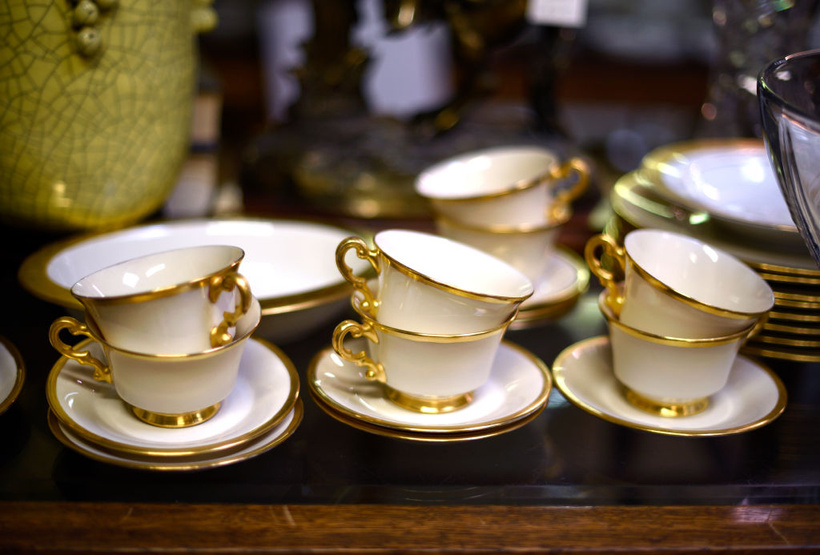
Sophie: My grandparents had their service-for-12 good china shipped to us, with each piece individually bubble wrapped, when my husband and I got married in 2002.
It's a perfectly lovely ivory with gold trim, and is a pattern that's been discontinued but isn't in high demand on the resale market. Our options are re-gift, donate to Goodwill, throw away, or just use it. After using these dishes maybe 10 times in 23 years, I think I'm just gonna put them into regular use and not sweat the inevitable chipping or degradation of the gold trim.
I suspect I'm gonna get the hairy eyeball about it, especially from my parents. Any advice on conveying 'This belongs to me, and I'll do what I want with it' in a light/funny yet firm way?
Anne Helen Petersen: I mean, shout-out to Sophie for using the stuff. This is one that came up so often in a recent thread that we did about dealing with stuff, and so many people were like, "Use the china. Use it. Put it in the dishwasher." So do you have any tips for her that she can say when people act weird about it?
Tara Bremer: Yes. And in my notes, I wrote in all caps, "100% use them." Super supportive of that. Not to oversimplify, I hate this, I hate not having all the context, but, like, ignore the hairy eyeball. These septuagenarians, they're wonderful. My parents are them. But they probably aren't going to change, and if they just say whatever comes to the top of their head, that's just what they're gonna do, and you can choose to take it personally or not. I would suggest some light phrases to have in your back pocket if you feel like you need to say anything at all. And tone is everything.
Anne Helen Petersen: Yeah.
Tara Bremer: Like my phrases aren't that clever, but if you just say, "Oh, I just love them so much, so I use them." Say it with a smile on your face.
Anne Helen Petersen: Yeah, totally.
Tara Bremer: They mean a lot to me, so I like seeing them every day.
Anne Helen Petersen: Or I want my kids to have memories of them.
Tara Bremer: Yes, absolutely. Right? I have memories of my parents' china 'cause they use it all the time, my boomer parents use theirs all the time. And I think I might say that, "Oh, yeah, I don't throw a lot of formal dinner parties or any dinner parties, so I just would rather use them."
And then if they disapprove, just let it roll.
Anne Helen Petersen: Love it. Great strategy. Okay, next question comes from Emily.
Emily: My spouse and I are child free, and are both at the age where our parents are wanting to pass along family heirlooms and memorabilia to their children. Knowing that we won't have another generation to inherit these items, and also facing the realities of limited storage space, we are trying to figure out ways that we can respectfully either decline these items or suggest other options for our parents to part with these sentimental keepsakes.
How do you suggest tackling these conversations? What are some tangible suggestions we can offer our parents?
Anne Helen Petersen: Ah, this is like the question, the questions. What do you suggest?
Tara Bremer: Well, let me start with a story, which is I have a child-free aunt and uncle who have been sending their keepsakes to the nieces and nephews.
There's a lot of us. And it's been such a lovely thing. My aunt is so respectful. Well, also, people know what I do, so they might be extra careful with me. [Laughter] But I know she does this with the other cousins. She texts me pictures and she's like, "Hey, I was thinking you might enjoy this," or, "Is there anything in this photo that you want?"
And a couple years ago I said, "Oh, I love that bird pitcher." It's a blue ceramic pitcher that's in the shape of a bird, and I use it every day to water my plants. I love it, and I think of her. And I think, again, to prepare ourselves for being the older generation, that's the approach. Like, let's offer things that are lovely, beautiful, useful, and hold other things loosely.
As far as tackling the conversations, clear is kind.
Anne Helen Petersen: Yeah.
Tara Bremer: And also, kind is kind. I think you let them know you're in the process of decluttering 'cause you've started to run out of space. You tell them you want some of their things, and maybe specific items. I think that has meant a lot to my own parents, to say, "Hey, you know that turquoise necklace thing that you have in a shadow box on the wall? I would like that thing."
But when they offer you things that you don't want, I would use phrases like, "Oh, I wish I had space for that, but I don't. It's so pretty, but maybe my brother would enjoy that. That's up his wheelhouse." Or, "So-and-so collects vintage quilts. I know she would use them for her photo shoots when she shoots people out in the grass," or whatever. I like to make it a conversation, a back and forth. Again, people love to give away things when they know someone values it. So help them, let it be a collaboration.
Sometimes, like don't shut it down, but in some cases, I do think the kind thing might be to just take the thing, and later deal with it. If you know it's gonna cause a whole upheaval, let's preserve the relationship first, and then later you can decide what you're gonna do with it.
Anne Helen Petersen: Yeah. And I think oftentimes sometimes sharing a memory that you have about that thing and how much you wish that you would have space, like my grandmother's piano, I would've loved to have had it, but I have no space for it.
And also the cost of transporting it would've been so significant and so cumbersome that there was just no way. And instead, and I get to keep this story with me now, my mom was able to sell it for very little money, like it wasn't about the money, to a family and a young girl who was starting piano lessons.
And now, I learned to play piano on that piano, and now another little girl, who I don't know, right? But she gets to learn piano on that piano, and that's just as meaningful to me in some ways, right? Like, I am not so stuck in family lineage that it feels bad to have someone outside of my family benefiting from that thing, if that makes sense.
Tara Bremer: Agreed. I had a friend, she's actually in her 70s, she was getting rid of a bookcase that her brother built for her, decades ago. And she's like, "I just don't have space for it. I don't need it. I don't want it. Do you want it?" And I was like, "You know, actually, my son, one of my kids, has a bunch of things that he wants to display," and so yes, I took it.
It was a whole ordeal. And he styled it, and it was my joy to take a picture of it and send it to her.
Anne Helen Petersen: Yes.
Tara Bremer: And I think that that made both of us feel really good, you know?
Anne Helen Petersen: Yeah. I like your idea of helping your parents come up with places that they could bring it. I tried to do that a little bit with my mom.
She was very clever about it already. Like, we had this old pinball machine, like an actual pre-digital pinball machine, huge size, that had lived many lives before we even got it. And again, what I would give to have this pinball machine in my life now. I love it so much. Sometimes I watch YouTube videos of it because it's like... it's a baseball themed pinball machine. But it needed repairs, which would've cost a lot of money. Also, how do you get a pinball machine across two states and a ferry? She found this guy in the next town over who was rehabbing pinball machines to open up an arcade for teenagers.
I was like, "Love this next life for this pinball machine." But again, she found it, but there were other things that I was hopefully able to give some suggestions about maybe who would like it, where it could go.
Tara Bremer: Yeah, and I think too, as grownups, when I see something that maybe is from my childhood and maybe a sibling has it or my parents are still using it, like, I'll just give you an example.
My parents have this teapot you put directly on the burner, and it's that old CorningWare, just -
Anne Helen Petersen: Yep, I can picture it in my head.
Tara Bremer: And I love it so much. I just went on eBay and I found it and I bought it, and that thing makes me really happy.
Anne Helen Petersen: That's great.
Tara Bremer: I have $20. I can buy this.
Anne Helen Petersen: So we've talked about parents, dealing with parents' stuff. This gets a little thornier when you're talking about in-laws, and Melody's gonna read this question from Natalie.
Melody Rowell: “How do I convince my in-laws that we cannot eventually take all of the stuff in their 3,000 square foot home, including a giant basement stuffed to the gills with holiday decor, games, clothes, photos, scrapbooks, regular books, et cetera?
And that not being able to take all of the stuff does not mean I hate all of it or won't take any of it. How should I tease out the subtle difference between ‘I don't want this many things in my house’ versus ‘I don't want this many of your things in my house’ when considering family dynamics and relationships and general mass consumerism and perfectionism?"
Anne Helen Petersen: Oofta boofta. Okay, what's your take here, Tara?
Tara Bremer: This is another really tough situation with the in-law component. I think that, just as your relationship goes, you do wanna make sure there's a difference. Let them know, like, "Oh yeah, I do this thing to be decluttery," or that it's not just about them.
You know what I mean? I'm wondering if she has already said something about this, like she won't be able to take it. Like, are they asking her to take it now or soon?
Anne Helen Petersen: Also, this is such a classic example of, like, the woman of the house is expected to deal with the in-laws. Really, this is a conversation that their partner should be having with their parents.
Tara Bremer: And as a future mother-in-law, I have two sons, I need to learn from this. I need to know -
Anne Helen Petersen: Yes.
Tara Bremer: - that I need to deal with my son, and also just really think about her, this future woman who I don't know yet. You know what I'm saying? Like, she doesn't want this crappy whatever that means a lot to us. My daughter might. I don't know.
So I'm wondering if she means, if Natalie means after they die.
Anne Helen Petersen: Yes, I think so. But also maybe, because we cannot eventually take all of the stuff in their 3,000 square foot home.
Tara Bremer: Okay. Yeah, yeah.
Anne Helen Petersen: I think a lot of people around our age are looking at their parents' or in-laws' homes and thinking about the inevitable.
Tara Bremer: Yep. As they should.
Anne Helen Petersen: Right? Even if it's 10, 15 years down the road, and just, like, hearing stories of other people who have had to do this and just wishing that there might be a little bit of a conversation about reducing it. It doesn't have to be, you know, Swedish death cleaning which is like, cleaning in preparation for your death, in a very Spartan way.
But it could be just thinking about the gift that you would give. But I think a lot of people, and this maybe is very American, are so scared of death that in some ways getting rid of some of those things is like inviting death to your door. Does that make sense?
Tara Bremer: Oh, yeah. That's happened to a family member in my family, an in-law situation, where my husband asked for something.
Anne Helen Petersen: Ahhh.
Tara Bremer: And they were like, "No, I'm not getting rid of that" because it felt too close to death. And my husband was not suggesting, "You're gonna die." He knew this thing wasn't being used and would like to use it, and it was immediately shut down.
So okay, lesson learned. Let's not do that. I do think that this question is about fear and anxiety. The fear and anxiety that we have that, like, we're gonna be facing death, a will, potential weird stuff with the will, planning a funeral, clearing out a house while grieving. Like, that sucks.
But I'm gonna tell you, it's gonna be okay. It's annoying that this generation often forces us to deal with this while we're grieving after they're gone, but that may be better than having a huge fight about it now.
Anne Helen Petersen: Yeah.
Tara Bremer: So in some cases I'm like, "Pick your battle. Pick your battle time." I don't know that I would try to convince anybody of anything in this situation.
Anne Helen Petersen: Yeah, especially as the daughter-in-law.
Tara Bremer: Right. Like, just don't.
Anne Helen Petersen: But I also have some empathy for Natalie here because I think she also maybe is sensing that when this happens, that she will take on a lot of the burden.
Tara Bremer: She may. And to sound a little coarse, what's gonna happen is the death is gonna happen, the funeral's gonna happen, and then one person will probably take the lead.
We'll say it's her. And you're gonna start the charge. You're gonna parse out belongings, and then you're gonna get a dumpster or you're gonna get the thrift store truck, and you're gonna have a painful, shitty week, and then it'll be over.
Anne Helen Petersen: Mm-hmm.
Tara Bremer: Within again, there's... I know no other context, but you're gonna have a short period of time where it's gonna suck, but I just don't know that it's worth the battle right now while the parents are still alive. I don't know.
Anne Helen Petersen: Nope, I hear that. I really hear that, and I think everyone has to think about how ready the older person in their life or the person who needs, whose stuff you're going to have to deal with, how ready are they to have this conversation? If they are very much not ready and they're not gonna be ready, then save yourself the pain now.
I agree with that, for sure. Actually, this is a great way to tee up, we have two kind of philosophical questions that are turning back to the self to end on. This question comes from Megan, and Melody's gonna read it.
Melody Rowell: “In response to the prompt about stuff from relatives, I'm wondering if social media is influencing how I feel about furniture my relatives have passed on.
My husband and I bought a house recently and were kindly offered lots of furniture from relatives. While we were grateful for and did accept some of it, we turned a lot down, in part because we didn't like how it looked. For how some of our relatives reacted to this, like we should take whatever we're offered and just be glad of it, I got the sense that in previous generations, a sense of personal style, especially when it comes to your home, was considered a frivolous luxury.
I can't help but wonder, has Instagram created or fostered the sense that you should curate what's in your home, and that there's a predominant aesthetic that this should follow? I'm struggling to balance a sense of being grateful for the pieces we did take with their family connections and stories, while feeling a little resentful that I'm expected to accept anything that's offered.
But I feel that it mightn't have bothered me so much if I didn't spend so much time on social media seeing perfect homes. I think this is much more pervasive than, say, interior design magazines of the past because of the hours spent on our phones, as opposed to picking up a magazine once a month.”
Anne Helen Petersen: Okay, so I understand what Megan is trying to get at here, right?
We are so obsessed, and you see this in interior design and also in redoing kitchens and stuff like that, with redoing things and redecorating, right? Whereas my grandparents' home, there was a sofa, there was a settee that was very special to me because I thought it was so fancy when I was a little kid.
Dark walnut, kind of ornate, and then it had maroon velvet, and they had it from the time that they moved into that house in the late '50s, early '60s until my granddad passed away in 2011… it was just there. And there were so many other pieces, same thing, either that they had, that had been passed down to them or that they bought it once and then they kept it forever.
Now, part of the reason for this is that stuff was better, like furniture was just better. This is just a fact.
Tara Bremer: Yes, 100%. Kitchen cabinets were built better. Yeah.
Anne Helen Petersen: Yes. Everything. Couches lasted longer, that sort of thing. And I totally, like, I understand that. At the same time, the way that a lot of our parents' and grandparents' furniture makes a room feel, like that is different.
The way that a bunch of heavy cherry furniture matching set in your bedroom, the way that that makes a room feel is different. And I think it's okay to be like, "That's not the feel I'm going for." What do you think, Tara?
Tara Bremer: I think that what we're talking about really is contentment. And yes, the internet does affect our contentment. I mean, for sure IG's a problem. Before that, it was blogs, and as she mentioned, it was decorating magazines and...
Anne Helen Petersen: Yeah, for sure.
Tara Bremer: But if IG is contributing to the dissatisfaction, mess around with the algorithm and try to foster a sense of contentment in other ways. But I also think that the cost of production and imports has allowed us to be choosier about what we have.
And we are just exposed to more choices no matter what. I mean go into Walmart, for Pete's sake. Back in the day, you needed your grandmother's china, 'cause otherwise you wouldn't have any. Today we can buy our own dishes or buy something that does please us.
So I think maybe quiet down the algorithm.
Anne Helen Petersen: Yeah. I do see this obsession with everything needs to be an expression of our true selves, and it needs to be at once individual but also conformist at the same time. It's very tricky to needle the thread, right? You should have a house that doesn't feel cookie cutter in any way, but also you should do it under a certain budget an, things should be nice.
But with that said, and I think you're right, like the more we get away from design stuff, like unfollow those accounts, make sure that your suggested posts are off, all that sort of thing. But the thing, the heart, or at least this is what sang to me from this question, is the grandparents or parents being kind of miffed that like, "How dare you not accept my gift? This is an expensive piece of furniture. This is quality," right? And -
Tara Bremer: Well, okay, so what about using humor to disarm that? Like, "I know, you're right. I'm vain." Or “I know I'm picky. It's so annoying. I can't help it.”
Anne Helen Petersen: Or this just doesn't really go with the rest of our house.
Like compliment it. Be like, "The craftsmanship on this-”
Tara Bremer: That's better. That's- That's better.
Anne Helen Petersen: “is so high. It's so high. It's just too bad that this wood just doesn't match with the rest of our wood or whatever.
Tara Bremer: I know, and I just, if my wood doesn't match, it's really gonna be bothersome to me.
Yeah. Like, I like that better. Mine might sound a little judgy to that generation.
Anne Helen Petersen: You know, I think the other thing that sometimes people don't account for is how difficult it is to move stuff from one place to another. And to make something that, instead of getting a table that fits your tiny apartment, right?
'Cause, sometimes you have a very - it needs to be a pretty specific size, and you have to spend a lot of time finding a table that is that size. Instead of just being like, "Well, I'm gonna make this large-ass table was my mom's grandma's," work in the space. There's joy to that, but also it can make you - every time you enter that space, you feel cramped.
You feel claustrophobic. One of the joys of adulthood is being able to have a little bit more choice. And it doesn't even mean that you need to spend a bunch of extra money. It might mean that you go to the thrift store and you find a table that someone like your mom or your grandma donated. And then you bring that right-sized piece of furniture into your house.
Tara Bremer: That’s right. Yeah, and I think that's a perfect example. We could say, "I hate that I cannot fit this thing in my kitchen. I hate it."
Anne Helen Petersen: Yeah.
Tara Bremer: Yeah.
Anne Helen Petersen: Right. Just like this is our whole strategy here is compliment and then -
Tara Bremer: What's it called? Like the compliment sandwich? That's not what it's called.
Anne Helen Petersen: No, compliment sandwich is right. For sure. Okay, and then I wanted to end with this question because I think a lot of us who have maybe internalized some of this decluttering mindset, we're trying to help other people in our lives declutter.
Like, some of it involves taking some pretty extreme measures, but we're also worried about, thinking about, what if I take this too far? So this question comes from Noelle.
Noelle: Like many millennials, I'm navigating the stuff dump from my boomer parents and feel like I've developed a pretty good system for it.
Most of it is immediately disposed of one way or another. However, I feel like this is impacting my own system around keeping things, and I sometimes think I'm being too liberal in what I toss in an effort to not become my parents and burden my children with stuff. It's like I'm living in an extreme, drowning in stuff from my parents and keeping almost nothing of my own.
What is worth saving? How can I strike a better balance of knowing what might be worth holding onto and what should be tossed? And how does the enshittification of everything factor into this? Will things today even last if I deem them worthy?
Tara Bremer: First of all, is enshittification, is that a word? Is that a thing?
Anne Helen Petersen: Oh, yeah, yeah. It's a concept, comes from Cory Doctorow, and it's this idea that basically stuff in our current moment of capitalism, as everything has been driven to become more optimized and more focused just on profit-mindedness, then the quality or the function of it gradually degrades.
So, if you're thinking about clothes, these sweaters are not worth hanging on to to donate to your grandchildren. Whereas, I actually received a sweater, my grandmother's cashmere sweater, that was still in pristine... Like, it was just beautiful, and that's because the quality was so high that it actually was worth keeping and passing down to another generation sort of thing, so.
Tara Bremer: Got it. This is a great word. I'm glad to know that term now. I really get Noelle's pendulum swing, what she's talking about. Too much stuff from parents, in a reactionary way, we're not keeping as much. I am more of a minimalist. I mean, I'm not a classic minimalist, but I am more of one because I'm exposed to so much excess.
Every week, I'm knee-deep in people's stuff. Not necessarily hoarding, but sometimes, but also just everybody, like standard middle class, too much stuff. I'm sure that my own minimalism is reactionary, but I don't really care in my situation. I mean, I've learned so much, right? Like, I've learned, oh, these are the things that people regret getting rid of, and these are things that no one ever cares about.
Anne Helen Petersen: Hmm. What do people regret getting rid of?
Tara Bremer: Sometimes it's really funny things that, like... I'll tell you a couple of mine. I donated a backpack that we never use, and my husband was like, "Hey, where's that backpack?"
And I'm like, "I regretted it because it impacted him." He was like, "Oh, I like it for this specific purpose, and it..." I mean, and it just made me feel really bad that I wasn't aware of that.
Anne Helen Petersen: Oh, that you hadn't asked him first.
Tara Bremer: Yeah, 'cause... I know what he likes and loves. Like, I don't get rid of his precious things, but that turned out was a little bit precious. I regret getting rid of some things like my stroller. I had a really great stroller for my oldest son. It was really hard back in 2005 to find a rear-facing stroller, but I was very much an attachment style mom, and I found one and I loved it, and then I started having more kids, and I was like, "I don't need this anymore 'cause it just is one."
And I just didn't really think through the continued use for it or that my sister might want it. It's just, it's nothing valuable, but, how many years later? My son's 20. Like, I still remember that. I mean, I have very few regrets. But okay, so there's these writers called The Minimalists.
Are you familiar with The Minimalists? They have a great concept called the 20/20 rule, 'cause I think a lot of people are worried about just-in-case items, like ‘just in case I need this thing.’ So their rubric for just in case is called the 20/20 rule. If it can be replaced in 20 minutes for less than $20, you can go ahead and move it along to its next life, whatever that might be.
And 90% of the time, maybe even more, you don't actually ever need that thing. But this is something that we have inherited from our parents. Like, we might need these twisty ties from the bread bag, so we're gonna keep them all. When in fact, no one ever needs a twisty tie. And if you do, they're really easy to get. And that more will come into your life. Or like how just even like -
Anne Helen Petersen: More will come into your life, that's the thing.
Tara Bremer: Exactly.
Anne Helen Petersen: Or maybe you could keep, you could keep five. You could put them in the little bag, like next to your Ziplocs just in case you have a bag that needs a twisty tie. Just in case. Right?
Tara Bremer: Yep. That'd be fine.
Anne Helen Petersen: Yeah. I really feel this tension too, and I do think it is kind of being part of this sandwich, right? Like being an adult and being at a point, a later in life adult, where you have accumulated stuff. Like, I, in some ways am very lucky in that I've moved a lot, and so every time I move, just shedding stuff always. And it feels -
Tara Bremer: cause you're not gonna wanna pay to move stuff you don't want.
Anne Helen Petersen: No, and like even just the practice of boxing something up is very clarifying, right? Like-
Tara Bremer: Yes.
Anne Helen Petersen: If you don't know what, where, which box it goes into, do you need it? That's interesting, right?
Tara Bremer: Yeah. And so often most people when they are moving, typically, not always, are moving to maybe a nicer house or a bigger house. And you wanna bring this thing into your new pretty house? Really? You know what I mean?
Anne Helen Petersen: Or just like, oh, I don't know. But at the same time I think, we had another question that was like, “I feel like I'm not gonna have any photos of myself."
And that I think it’s also coming from anxiety over digitization and link rot, which is the fact that a lot of things that we used to read and we used to post are now degrading. And there are photos from very important times in my life that are only saved on Facebook in crappy, degraded, small size stuff, right?
Tara Bremer: Yeah.
Anne Helen Petersen: What's gonna happen with that? Or like I call it the lost years of music and of writing and that sort of thing that are on laptops that never got digitized and the stuff never carried over to now wherever all of the stuff lives in Google Docs or in Google Photos and that sort of thing.
But there's this giant gap, and it's normal to fear, I think, that I'm going to feel sad about that space. But then the only thing that gives me solace there is that our relatives had so much less documentation of self. Right? And they still had very vivid memories. Like, whenever I go out and I'm like, "Oh, I wish I had my phone with me. Like, I just wanna take a picture." You know, this ex-boyfriend used to always say to me, "Take a picture with your heart," and it's so cheesy. But that... make a memory instead of relying on the self documentation or the stuff that reminds you of that thing.
Tara Bremer: It's so true. And even though we have digital photos and stuff, is that also what we wanna burden our kids with? Now thankfully we've got searchability, but sometimes we don't need a picture of the sunset.
Anne Helen Petersen: No, it's just for us.
Tara Bremer: Maybe we have it just for a moment, or yeah, we don't post it, but maybe we also just have it and then eventually delete it. I don't know. Are you familiar with Laura Tremaine?
Anne Helen Petersen: Mm-mm. No.
Tara Bremer: Okay. Laura Tremaine, she's popular in my internet circle. She's a Los Angeles based reader and writer. But she says, she often says, "Document your own history."
Anne Helen Petersen: Hm.
Tara Bremer: And I remember specifically during the LA fires, was it last year now? Mm-hmm. That she said, "Document your own history."
So she will often take screenshots of her phone when a news article pops up with an important headline or sometimes I screenshot meaningful texts from my kids, 'cause even though I'll have the texts, I'm never gonna scroll back.
Anne Helen Petersen: You might not always have the texts, right? Like things get wiped, you know?
Tara Bremer: We might not ... Well, good point. Good point. So especially recently, with my kids being teenagers it’s super interesting and funny, I'll screenshot some stuff, including some meltdowns. Like, oh, I'm getting 50 texts that say, "Mom, mom, mom, mommy, mommy." Because we gotta document our own history. And so there's some sort of balance. But I'm a big photo deleter as well. So there's a lot to talk about here.
Anne Helen Petersen: Yeah. That's a way to have some digital hygiene, right? Some digital -
Tara Bremer: Ooh, yeah.
Anne Helen Petersen: - keeping those spaces decluttered, but at the same time remembering, and I love your point about documenting the small things, whatever they are, that aren't necessarily frame worthy per se, but are part of your life that will remind you of yourself, 'cause I think that's part of what we are scared of, is somehow losing our memories of ourselves without those anchor points, whether they're journals or other analog things. But…
Tara Bremer: I agree. And I think to help with mom guilt too. Like, I want... I will look back at all my mistakes. I know I will 'cause I already do. And so if I have something that reminds me of my awesome kids, she got a positive referral from a teacher, screenshot. Or I got a sweet text from my son about something I was upset about, screenshot.
Anne Helen Petersen: Yeah.
Tara Bremer: I wanna have some points to remember.
Anne Helen Petersen: Yeah. And I feel like that's more valuable than a billion videos. Like, you can have some videos. But you don't need all of the videos. I know that from my dogs. I know dogs aren't children, but I probably don't need as many photos of my dogs.
So where can people find you on the internet if they want to hear more from you, Tara?
Tara Bremer: So probably the funnest place to find me is on Instagram, @house.peace. That's my business account, and I do lots of before and after pictures and tips and tricks. My personal account is @TaraBBrimmer. I talk about my kids being in band a lot on that on that page.
Anne Helen Petersen: What do they play?
Tara Bremer: I've got a trumpet, a percussionist, and a flute player.
Anne Helen Petersen: Amazing.
Tara Bremer: A flautist. She's a flautist in a college band. Plays piccolo, actually. So then I have a newsletter that you can find via my IG. Look for that and sign up for that.
Anne Helen Petersen: Amazing. Thank you so much for joining me. This was really fun.
Tara Bremer: Thank you so much. I loved it.